

Basketball Hoop Installation Services for Schools, Gyms, and Recreational Facilities
Fully Licensed & Insured
Safety is our #1 Priority
Professional basketball hoop installation protects players, improves accuracy, and keeps equipment stable under daily pressure. Schools, gyms, and recreational facilities need certified setup because high-use environments demand secure anchoring, correct height calibration, safe clearances, and reliable hardware installation. A properly installed system reduces wobble, prevents structural failure, and supports years of consistent performance across indoor courts, outdoor playgrounds, and competitive sports complexes.
- Safer basketball hoop installation built for daily player use
- Stronger stability for high-traffic courts and training centers
- Regulation-aware height calibration for youth and adult play
- Long-term durability under heavy practice and game schedules
- Proper anchoring and reinforced support systems for every facility
Professional Basketball Hoop Installation for Schools and Gyms
Backyard basketball hoops and facility hoops are not the same project. Schools, recreation centers, and sports complexes deal with constant impact, dozens of users per day, and strict safety expectations. Loose bolts, shallow footings, weak mounts, or off-spec rim heights quickly turn into liability issues. Over time, untrained installs lead to leaning posts, cracked backboards, and unsafe play conditions.
Professional installation solves these problems early. Our team handle anchoring, leveling, hardware torque, and clearance checks so the system performs the way the manufacturer designed it. The result is a safer court, cleaner setup, and equipment that holds up to real use.
What Makes Basketball Hoop Installation Critical for High-Use Facilities
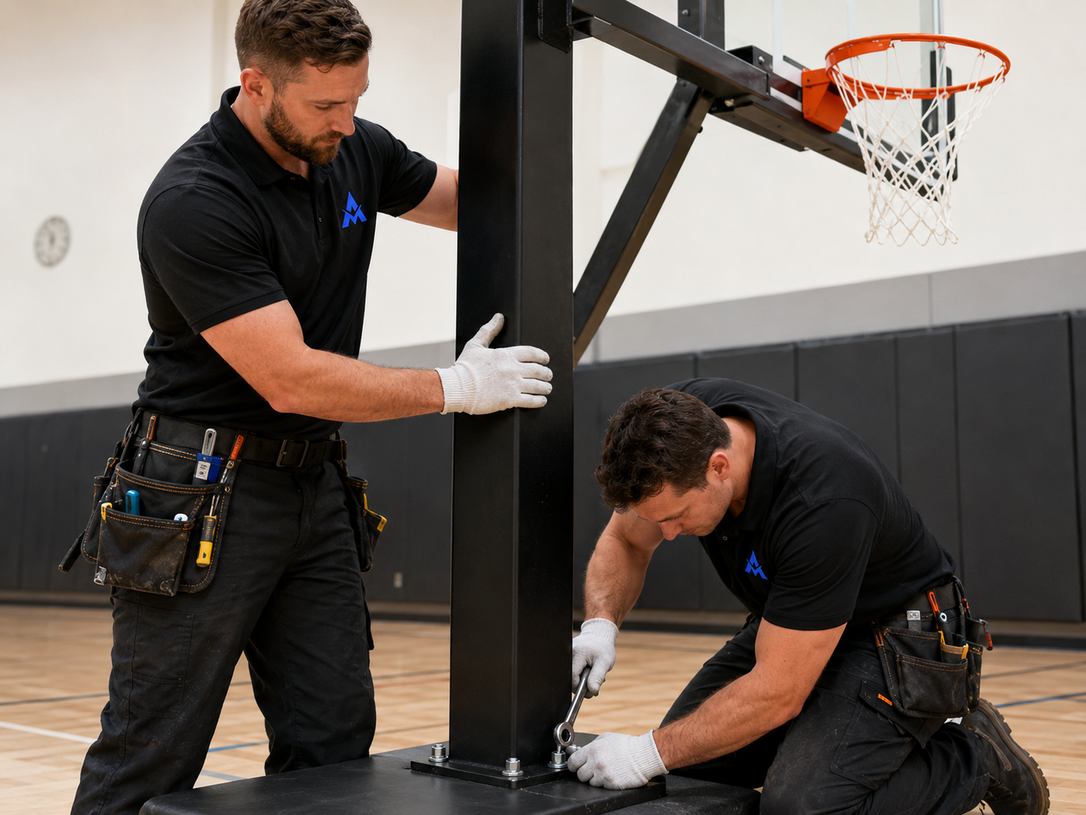
High-use facilities place stress on every part of a hoop system, from the rim to the base. Constant dunking, rebounding, and hanging multiply wear, so installation must address load, vibration, weather, and player impact. A weak setup fails fast under that pressure.
Facility managers usually deal with risks like these:
- Unstable posts caused by shallow or undersized footings
- Loose backboards from incorrect torque on mounting hardware
- Rim sag from missing reinforcement brackets
- Tripping hazards near base pads or anchor plates
- Premature rust on outdoor systems without sealed hardware
A community court at an apartment complex, a church gym, or a youth sports facility all share the same truth. Heavy use exposes every installation shortcut. For a deeper look at field tested setup practices, this guide on basketball hoop installation covers what changes when foot traffic is constant.
Choosing the Right Basketball Hoop System for Schools and Gyms
The right system depends on space, budget, age group, and how often the court will be used. Schools usually need ceiling-suspended or wall-mounted units, while parks lean toward an in-ground basketball hoop systems. Recreation centers often mix portable and permanent setups for flexibility.
Common system types include:
- In-ground hoops for outdoor courts and permanent installs
- Portable hoops for multi-use gyms and apartment complexes
- Wall mounted units for tight indoor spaces
- Ceiling-suspended systems for full-size school gymnasiums
- Adjustable youth hoops for elementary schools and daycare centers
Goalrilla offers heavy-duty in-ground basketball hoop systems built for commercial wear, and Lifetime carries lighter basketball hoop models suitable for community courts. If you want guidance on matching a unit to your space, this resource on how to choose basketball hoop system configurations is a practical starting point.
Indoor vs Outdoor Installation Requirements for Recreational Spaces
Indoor and outdoor installs follow very different rules. Indoor systems focus on ceiling load, wall reinforcement, and clearance from bleachers. Outdoor systems focus on concrete footings, weatherproofing, and ground stability. Mixing up these requirements is one of the fastest ways to compromise safety.
Key differences at a glance
| Factor | Indoor Installation | Outdoor Installation |
|---|---|---|
| Mounting | Wall, ceiling, or floor sleeve | In-ground concrete footing |
| Hardware | Steel brackets, rated anchors | Galvanized, weather-sealed bolts |
| Clearance | 4 to 6 feet behind backboard | 8+ feet around play area |
| Weather Prep | Climate-controlled, minimal | UV-resistant pads and powder coat |
| Common Sites | School gyms, church gyms | Parks, apartments, driveways |
For wall-based projects, our wall-mounted basketball hoop setup service handles reinforcement and bracket placement. For permanent outdoor courts, in-ground basketball hoop installation covers excavation, concrete, and curing.
How Height Calibration Affects Player Safety and Performance
Rim height directly affects shooting form, jump mechanics, and injury risk. A miscalibrated hoop teaches incorrect technique and causes inconsistent play. Schools and youth programs must match rim height to age group, and competitive facilities must hit the 10-foot regulation exactly.
Standard height ranges
- 8 feet for ages 7 and under
- 9 feet for ages 8 to 10
- 10 feet for ages 11 and older, including adult and competitive play
Calibration best practices
Use a laser level or measured pole from the playing surface to the front rim edge. Re-check after the first week of play once hardware settles. You can review official regulation basketball hoop dimensions to confirm spacing, rim diameter, and backboard placement for tournament-ready courts.
Foundation and Anchoring Methods That Ensure Long-Term Stability
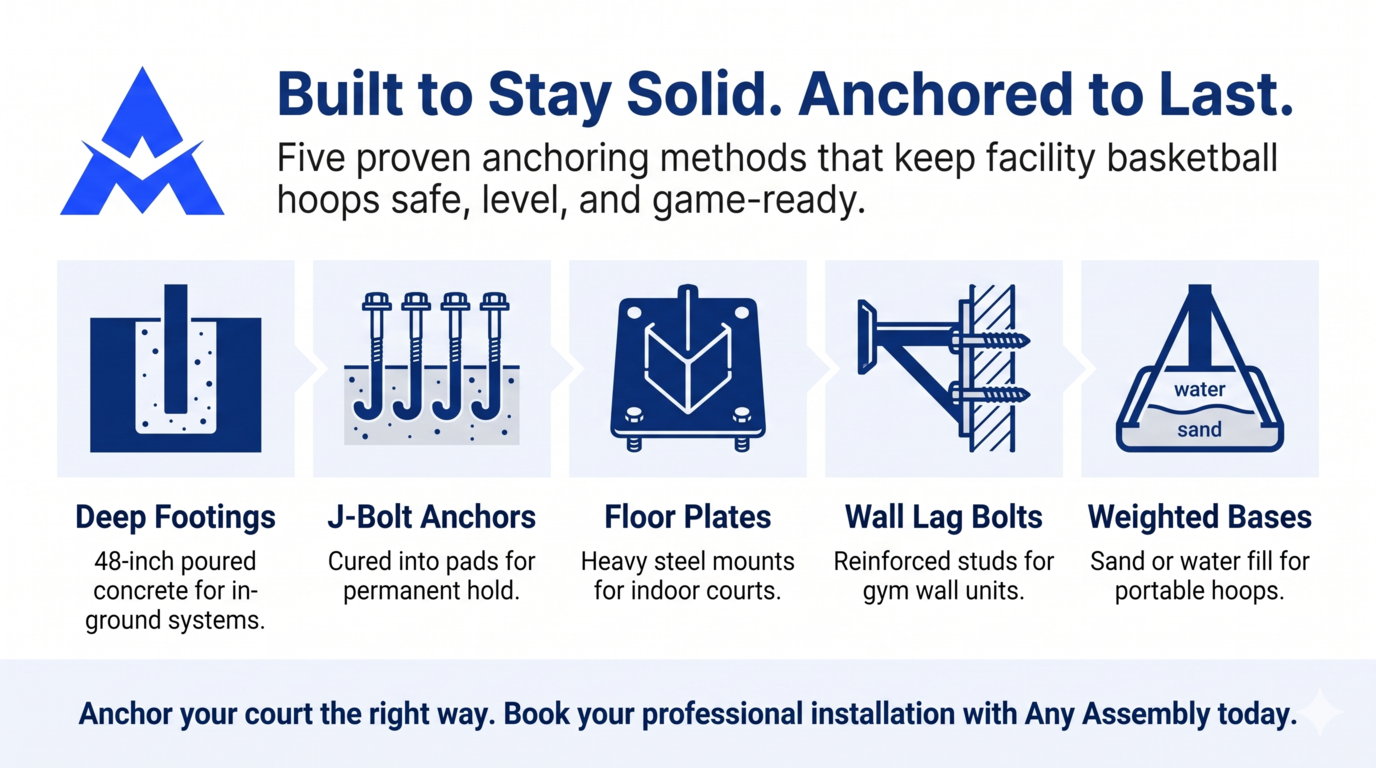
Anchoring is the foundation of every safe hoop. Without proper footings or mounting plates, even the best system will lean, wobble, or fail. Commercial installs require deeper footings and stronger hardware than residential setups.
Reliable anchoring methods include:
- Poured concrete footings 48 inches deep for in-ground systems
- J-bolt anchor kits cured into concrete pads
- Heavy steel plates with expansion anchors for indoor floor mounts
- Reinforced wall studs and lag bolts for wall units
- Weighted bases filled with sand or water for portable hoops
For movable systems, our portable basketball hoop assembly team handles base weighting, leveling, and on-site placement. Larger facility projects often pair this with broader recreational equipment setup for a fully outfitted space.
Common Installation Mistakes in Commercial Basketball Systems
Even experienced facility teams run into avoidable problems when crews skip steps. Most failures trace back to a handful of repeat issues.
- Shallow concrete footings that shift after one season
- Incorrect torque values on backboard and rim hardware
- Skipped leveling, leading to crooked play angles
- Missing safety padding on posts and base plates
- Reusing rusted hardware from an older hoop
Facilities planning major court changes also benefit from coordinated services like playset relocation planning when the layout includes multiple recreation pieces.
How Schools and Gyms Maintain Basketball Hoop Safety Standards
Basketball hoop installation services include assembling, anchoring, mounting, leveling, height-checking, and securing basketball systems so they stay stable, safe, and ready for daily use in schools, gyms, parks, and recreational facilities. Maintenance keeps that work intact.
Routine inspection checklist
- Check bolt torque every 90 days
- Inspect welds, brackets, and net hooks for cracks
- Test backboard padding and rim breakaway function
- Confirm rim height after heavy tournament weeks
- Document each inspection for compliance records
Facilities that include multi-purpose rooms or arcades often schedule these checks alongside game table disassembly or seasonal equipment swaps to keep the whole space ready.
Why Professional Installation Reduces Liability Risks
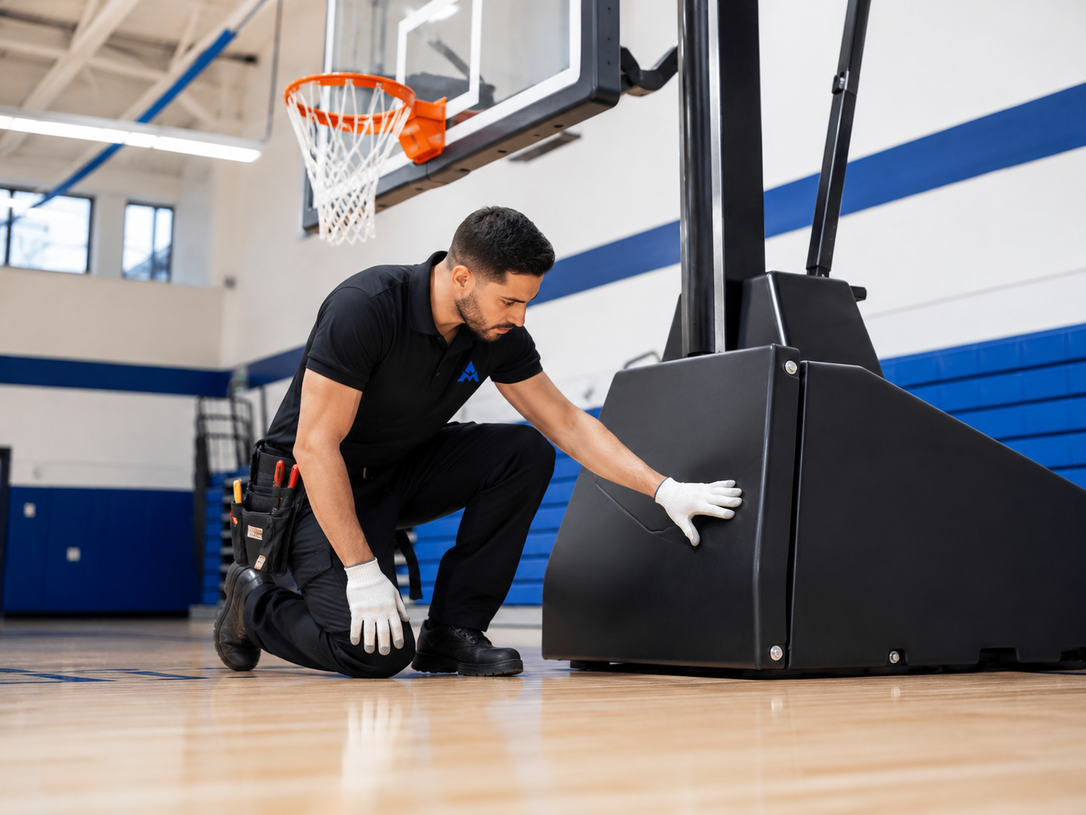
A poorly installed hoop is a lawsuit waiting to happen. Schools, apartment complexes, and commercial training facilities carry real liability when a backboard falls, a post leans, or a player is injured by failing hardware. Professional crews follow manufacturer specs, document torque values, and certify each install.
That documentation protects administrators during audits and insurance reviews. It also signals to parents, members, and athletes that the facility takes safety seriously. Larger venues frequently extend this standard to commercial recreation services covering courts, trampolines, and play structures together.
When Facilities Should Upgrade or Replace Basketball Hoops
Even commercial hoops have a lifespan. Watching for early warning signs prevents emergency closures and unsafe play.
Replace or upgrade when you notice:
- Visible rust at the base, post welds, or rim
- Persistent wobble after retightening hardware
- Cracks or chips on tempered glass backboards
- Sun-faded acrylic boards with reduced visibility
- Outdated breakaway rims that no longer spring back
If your hoops are still solid but the rest of your court needs work, our full assembly service options cover bleachers, scoreboards, and related sports equipment. Budget-conscious facilities can also review current basketball installation costs before scheduling a replacement.
Get Professional Basketball Hoop Installation Support
Any Assembly delivers safe, code-aware, durable basketball hoop installation for schools, gyms, sports complexes, and community courts. Our crews handle anchoring, leveling, height calibration, and hardware torque so your court is ready for daily play. The same care you would expect from professional assembly expectations carries into every install, along with smart storage placement planning for surrounding equipment.
Ready to upgrade your facility? Contact Any Assembly to schedule your installation today.
FREQUENTLY ASKED QUESTIONS
What type of basketball hoop is best for schools?
Most schools use ceiling-suspended or wall-mounted hoops in gymnasiums and heavy-duty in-ground systems for outdoor courts. The right choice depends on ceiling height, available wall structure, and the age group using the court.
How high should basketball hoops be installed?
Regulation height is 10 feet from the playing surface to the top of the rim for ages 11 and older. Younger age groups use 8 or 9-foot rims to support correct shooting form and reduce strain.
How deep does an in-ground basketball hoop need to be?
Commercial in-ground hoops typically require a concrete footing 48 inches deep and 16 to 24 inches wide. Depth depends on soil type, frost line, and the manufacturer specifications for the specific system.
Are indoor and outdoor hoops installed differently?
Yes. Indoor hoops attach to walls, ceilings, or floor sleeves with rated brackets, while outdoor hoops require excavated footings, weatherproof hardware, and UV-resistant components for long-term durability.
How long does commercial basketball hoop installation take?
Most commercial installs take 4 to 8 hours, though in-ground systems need an additional 48 to 72 hours for concrete curing. Larger gym projects with multiple units may stretch across two service days.
What safety rules apply to school basketball courts?
Schools must follow manufacturer specifications, maintain proper clearances, use padded posts, and inspect hardware regularly. Local building codes and insurance carriers may add documentation and inspection frequency requirements.
When is professional basketball hoop installation necessary?
Professional installation is essential whenever hoops will see daily institutional use, require concrete footings, involve wall or ceiling mounting, or fall under school, municipal, or commercial liability standards.
How often should facility basketball hoops be inspected?
A full inspection every 90 days is recommended for high-use facilities, with quick visual checks weekly. Tournaments, heavy practice seasons, or storms should trigger an additional inspection before the next session.
To Ease Your Move Or Redecorate Your Home Space
Follow a Few Easy Steps
Tells us your needs
Please fill up the contact form and provide us with as many details of your project as possible.
Approve Estimate
Our experts will review your project needs and create a plan that works with your schedule. You will then have to review & approve the plan via email.
Project Kick-Off
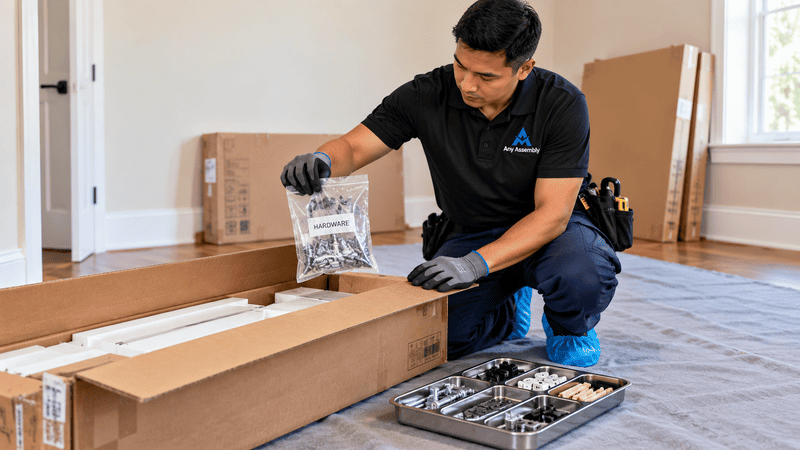
Once you have approved our solution plan, we'll send professional installers who own just the right tools & equipment in their arsenal to complete your project.
Customer Service 24/7
We’d love to hear from you. Choose the most convenient method and we’ll get back to you as soon as we can.
Contact Us
Contact Us
2707 N Rolling Rd #109, Windsor Mill, Maryland 21244
+1(410) 493-4488
VA
Any Assembly Virginia
+1(703) 596-0086
DC
Any Assembly Washington
+1(202) 684-6782
PA
Any Assembly Pennsylvania
+1(267) 209-0710