

Moving and Furniture Installation Services for Office Relocations and Business Expansions
Fully Licensed & Insured
Safety is our #1 Priority
Professional moving and furniture installation services help businesses relocate faster, protect equipment, and reopen with less confusion. When disassembly, transport, reassembly, and layout planning are handled together, teams avoid delays and get back to work sooner.
- Faster moves with clearer sequencing
- Better organization from pickup to setup
- Safer transport for desks, cubicles, and storage
- Workspaces rebuilt correctly the first time
- Less disruption for staff and daily operations
Office Relocation and Furniture Installation Services for Growing Businesses
Office moves often start with a simple goal: get into the new space quickly. Then reality sets in. Desks do not fit through doorways, cubicles arrive without labeled hardware, departments are unsure where to sit, and leadership loses productive hours to setup issues. For startups, medical offices, legal firms, and expanding teams, those small problems become expensive workflow disruption fast. The smarter approach is coordinated moving and installation support that handles breakdown, transport, reassembly, and layout execution as one organized project, so the new office works from day one.
Why Businesses Use Professional Moving and Furniture Installation Services
Businesses hire professional office move support because relocation is not just about getting furniture from one address to another. It is about protecting productivity, keeping teams organized, and making sure the new space is functional as soon as people walk in.
Any Assembly is especially valuable when companies need one partner to manage transport and setup together. That reduces vendor handoffs, missed timing, and confusion between movers and installers. Their commercial furniture services are useful for startups opening a first office, legal offices shifting floors, and growing businesses adding more workstations without losing days to setup errors.
Key reasons businesses outsource:
- Less downtime during moves and expansions
- Fewer damaged or missing parts
- Clearer room by room placement
- Safer handling of heavy or modular furniture
- Faster return to normal operations
What Furniture Is Commonly Moved During Office Relocations
Most office relocations involve more than desks and chairs. Businesses usually move modular workstations, conference tables, reception desks, filing systems, shelving, break room furniture, and specialty pieces that need careful handling and correct reinstallation.
Medical offices may need waiting room seating and exam room casework positioned precisely. Legal offices often move large desks, storage cabinets, and conference furniture that cannot arrive scratched or unstable. For business specific environments, professional teams often follow standards similar to installation standards for medical, legal, and corporate offices.
Common items include:
- Cubicles and panel systems
- Executive desks and conference tables
- Filing cabinets and shelving
- Reception furniture
- Break room and lounge furniture
- Home office setups for executives and remote staff
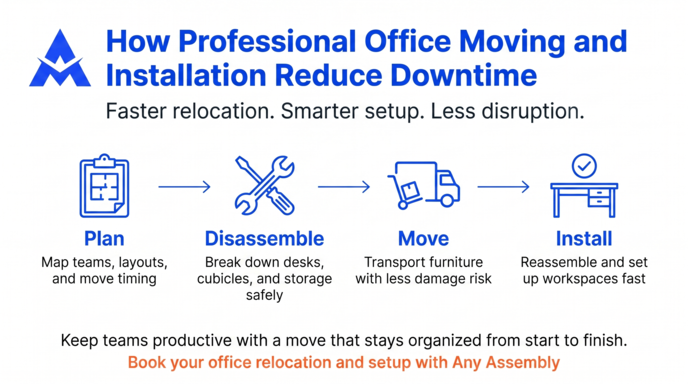
How Professional Installation Helps Reduce Downtime
Professional installation reduces downtime by turning a move into a planned reset instead of a drawn out unpacking project. Businesses save time when furniture is placed correctly, assembled safely, and aligned with the new floor plan before employees return.
Faster room readiness
With office furniture assembly, teams do not lose half a week figuring out which hardware belongs to which workstation. Desks, storage units, and conference rooms are ready for use sooner.
Better operational flow
Any Assembly can sequence installation by department, which helps medical offices reopen priority rooms first and lets expanding teams phase staff back into the workspace without chaos.
Can Office Relocations Be Completed Without Disrupting Operations
Office relocations can be completed with minimal disruption when the move is phased, timed around business hours, and supported by a team that understands workflow continuity. The goal is not a perfect pause. It is a controlled transition.
For example, a hybrid company might move departments in stages while remote staff stay active off-site. Executive home workspaces may need extra planning, which is why some companies also review home office moving services for remote workers upgrading during broader transitions.
Best practices include:
- Moving after hours or over weekends
- Prioritizing critical teams first
- Labeling by employee or department
- Pre-assigning furniture placement
- Keeping IT and furniture setup on the same schedule
What Causes Delays During Commercial Moves
Commercial move delays usually come from poor coordination, not bad luck. Unlabeled furniture, missing hardware, elevator restrictions, unclear floor plans, and disconnected transport schedules are what turn a one-day move into a multi-day disruption.
A big safeguard is using coordinated office moving services instead of separating transport from setup. Businesses should also understand moving risk before the truck is loaded, including federal guidance on liability protection and guidance on lost or damaged item claims, because claims and replacement delays can interrupt operations even after the move is finished.
Common delay triggers:
- No inventory or labeling system
- Last-minute layout changes
- Furniture that was never pre-measured
- Incomplete disassembly before loading
- No accountability for final placement
| Delay Risk | Why It Slows the Move | How to Prevent It |
|---|---|---|
| Unlabeled furniture and boxes | Crews waste time figuring out placement by room or team | Label everything by department, room, or employee |
| Missing hardware or loose parts | Desks, cubicles, and shelving cannot be reassembled on schedule | Bag, tag, and organize all screws, brackets, and connectors |
| No finalized floor plan | Teams stop repeatedly to ask where furniture should go | Approve the layout before move day |
| Oversized furniture left fully assembled | Large items get stuck in doors, elevators, and hallways | Disassemble bulky desks, tables, and storage units in advance |
| Elevator or loading dock conflicts | Movers lose time waiting for building access | Reserve access windows with building management early |
| Separate moving and installation crews | Poor handoff creates confusion and setup delays | Use one coordinated team for transport and installation |
How Furniture Disassembly and Reassembly Improves Efficiency
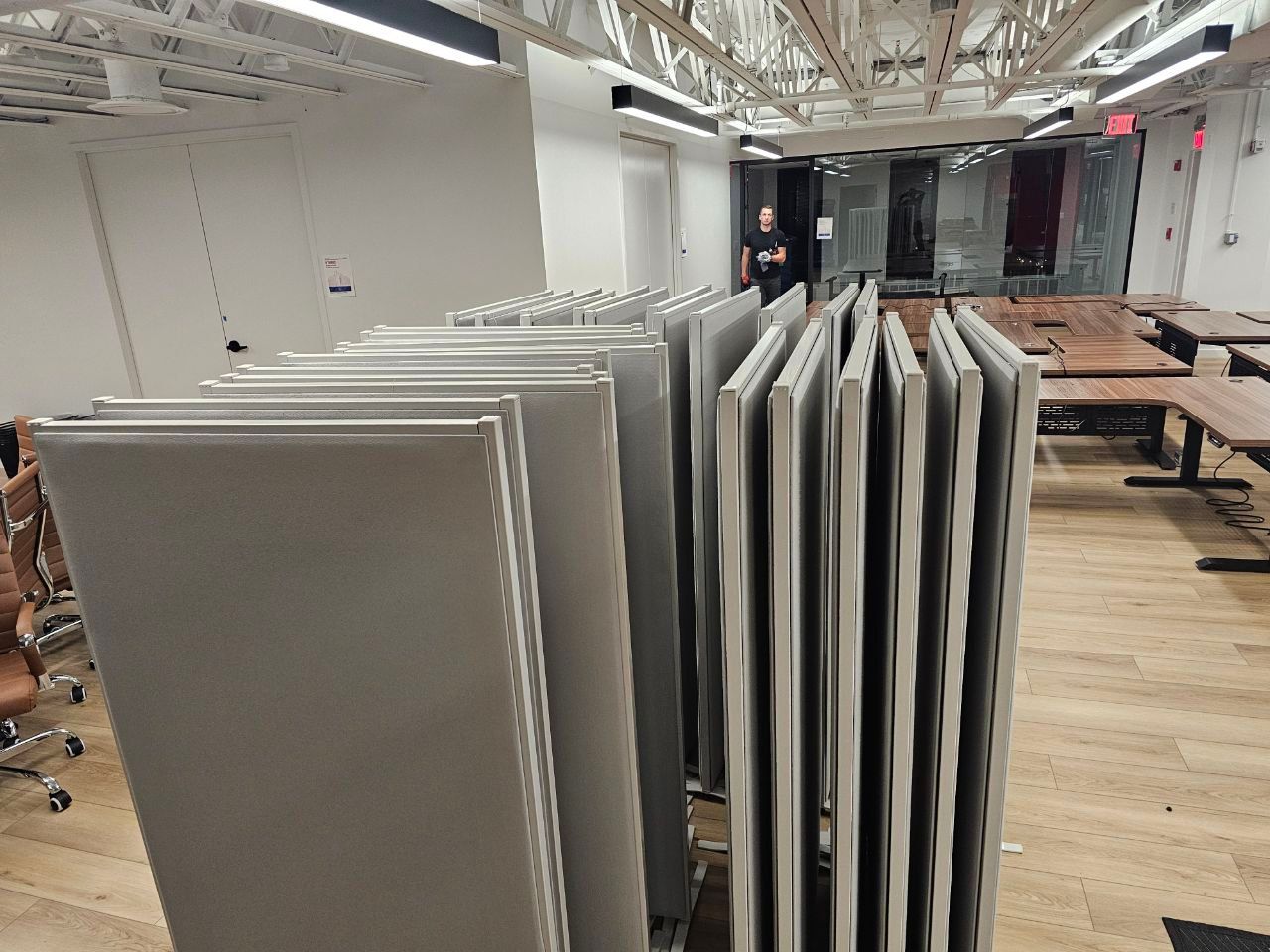
Furniture disassembly and reassembly improve efficiency because large office pieces move faster, fit through tight spaces more safely, and arrive ready for correct setup. It also prevents the scramble that happens when bulky furniture is forced through hallways or rebuilt from memory.
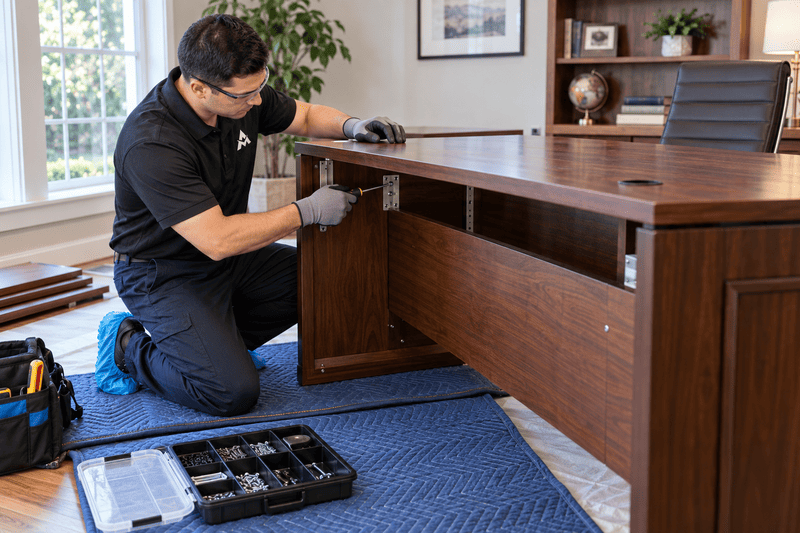
Any Assembly’s professional furniture disassembly and reassembly helps businesses move cubicles, desks, storage systems, and conference furniture without losing hardware or damaging finishes. For workstation heavy projects, references on office furniture disassembly and broader disassembly and relocation planning reinforce the same principle: breakdown and rebuild must be treated as part of the move, not an afterthought.
Benefits include:
- Easier loading and safer transport
- Better hardware tracking
- Faster reassembly on-site
- Less damage at doors, stairs, and elevators
Why Workspace Planning Matters During Business Expansions
Workspace planning matters because expansion is not just about fitting more furniture into more square footage. It is about supporting traffic flow, collaboration, privacy, storage, and future growth without creating a cramped or inefficient office.
A startup adding ten employees may need denser benching. A legal office may need more private zones. A medical office may need separation between patient-facing and admin areas. Any Assembly can support those changes through a full range of business setup services, helping businesses treat expansion like an operational upgrade instead of a rushed furniture drop.
What Mistakes Create Problems During Office Furniture Setup
Office furniture setup problems usually come from rushing the last 20 percent of the project. When teams skip layout confirmation, ignore hardware sorting, or assign setup to untrained staff, the result is unstable furniture, poor spacing, and wasted labor.
Planning mistakes
Businesses often move first and decide placement later. That creates rework, blocked pathways, and department mismatches.
Execution mistakes
Heavy pieces get dragged instead of lifted, parts are mixed between rooms, and specialty environments such as medical offices need stricter setup accuracy than a casual approach can deliver.
How to Prepare for a Smooth Office Relocation
A smooth office relocation starts well before moving day. The best results come from early planning, accurate inventory, and a clear sequence for what gets disassembled, transported, reassembled, and placed first.
Preparation is where many costly problems are prevented. Before the move, teams should measure access points, confirm floor plans, identify priority departments, and review how to prepare large furniture for movers so oversized desks, storage units, and conference tables do not create day of delays.
A strong checklist includes:
- Inventory every furniture piece
- Label by room or team
- Separate high-priority workstations
- Confirm access, parking, and elevator timing
- Schedule movers and installers as one process
Get Your Office Relocation and Setup Handled Professionally
When your business needs an organized move, reduced downtime, and a workspace that is ready to use fast, contact Any Assembly and build a plan that covers transport, installation, and final setup. If your project extends beyond desks and cubicles, it also helps to review what to expect from professional furniture assembly services for homes and offices.
For broader facility upgrades, some teams also evaluate commercial bike rack installation and budget for basketball systems hidden installation costs before expansion work begins.
FREQUENTLY ASKED QUESTIONS
How long does an office relocation usually take?
Most small office relocations can be completed in one to three days, while larger moves may take longer depending on furniture volume, access, and setup complexity. A detailed plan and coordinated installation schedule usually shorten the timeline.
Should office furniture be disassembled before moving?
Yes, many desks, cubicles, conference tables, and storage systems should be disassembled before moving. This makes transport safer, helps furniture fit through tight spaces, and reduces the risk of damage.
How do businesses reduce downtime during a move?
Businesses reduce downtime by moving in phases, scheduling after hours, and coordinating transport with reassembly and layout setup. Priority teams and essential workstations should be installed first.
What services are included in office moving and furniture installation?
These services often include disassembly, packing coordination, transport, unloading, reassembly, placement, and layout-based setup. Some projects also include cubicle reconfiguration, storage installation, and workspace planning.
How is an office layout planned after relocation?
A good layout is planned around workflow, team size, circulation paths, privacy needs, and future growth. The best setup balances usable space with employee comfort and operational efficiency.
Can medical offices and legal offices use the same moving approach as standard offices?
Not always. Medical and legal offices usually need tighter organization, more precise room assignments, and greater care with specialized furniture and sensitive work areas.
Is it better to hire one company for moving and installation?
Yes, one coordinated provider often creates a smoother project because transport and setup follow the same schedule and accountability is clearer. That usually means fewer delays, fewer handoff mistakes, and a faster return to work.

To Ease Your Move Or Redecorate Your Home Space
Follow a Few Easy Steps
Tells us your needs
Please fill up the contact form and provide us with as many details of your project as possible.
Approve Estimate
Our experts will review your project needs and create a plan that works with your schedule. You will then have to review & approve the plan via email.
Project Kick-Off
Once you have approved our solution plan, we'll send professional installers who own just the right tools & equipment in their arsenal to complete your project.
Customer Service 24/7
We’d love to hear from you. Choose the most convenient method and we’ll get back to you as soon as we can.
Contact Us
Contact Us
2707 N Rolling Rd #109, Windsor Mill, Maryland 21244
+1(410) 493-4488
VA
Any Assembly Virginia
+1(703) 596-0086
DC
Any Assembly Washington
+1(202) 684-6782
PA
Any Assembly Pennsylvania
+1(267) 209-0710