

Trampoline Assembly Service
EXPERT FURNITURE AND FITNESS EQUIPMENT INSTALLATION | RESIDENTIAL AND OFFICE MOVING | STORAGE AND DELIVERY SERVICES
Fully Licensed & Insured
Safety is our #1 Priority
All The Services You Need, In One Place
Trampoline Installation Services
Trampoline assembly and installation services cover the full setup of a trampoline, including frame construction, spring alignment, enclosure fitting, and ground anchoring. Professional installers focus on stability, safety, and correct positioning so the equipment performs reliably for years. Proper setup reduces injury risks, prevents wind displacement, and ensures the trampoline meets recommended safety standards from day one.
- Safer backyard setup for children and families
- Proper frame alignment for stable, even bouncing
- Secure anchoring and stability against wind and movement
- Reduced injury risk through correct spring and enclosure fitting
- Longer equipment lifespan with professional installation
Trampoline Installation Problems, Safety Risks, and Professional Setup Solutions
Many homeowners underestimate how complex a trampoline really is. A loose bolt, misaligned spring, or unstable frame can quickly turn backyard fun into a serious accident. Add unpredictable weather, uneven ground, and missing anchors, and the risks grow even further. That is where trained installers step in.
Professional trampoline setup ensures every component is secured correctly, anchored properly, and aligned for safe, long-term use, giving families confidence that the equipment is ready for daily play.
Why Professional Trampoline Assembly and Installation Matters
Professional trampoline installation matters because trampolines involve heavy frames, high-tension springs, and structural components that must be assembled with precision. A trained installer ensures every part is tightened, aligned, and anchored correctly, reducing the chance of collapse, injury, or premature wear. Safe setup also protects your investment over time.
Trampolines are not simple weekend projects. Most models include hundreds of small parts, and a single overlooked bolt can compromise the entire structure. Families often discover this after wobbly bounces, sagging mats, or sudden frame shifts. Working with experienced installers means each spring is hooked at the correct tension, the enclosure is sealed without gaps, and the frame sits perfectly level. For homeowners exploring broader safety considerations, this guide on playset and trampoline installation safety tips every homeowner should know offers practical insight worth reviewing before any backyard project begins.
What Types of Trampolines Can Be Installed Safely
Almost every modern trampoline model can be installed safely when handled by trained technicians. This includes round, rectangular, oval, mini, in-ground, and springless designs. Each style requires specific assembly techniques, anchoring methods, and surface preparation to ensure stability and consistent bounce performance.
Round trampolines remain the most popular choice for residential backyards because they direct bouncers toward the center. Rectangular models, often found in schools and gymnastics programs, deliver stronger lift and require reinforced anchoring. In-ground trampolines need careful excavation and drainage planning, while springless options from brands like Springfree trampolines require precise rod alignment. Budget-friendly models commonly sold through retailers such as Walmart's outdoor trampoline collection also benefit from professional setup since their hardware tolerances are tighter than they appear.
| Trampoline Type | Best Setting | Anchoring Need | Setup Complexity |
|---|---|---|---|
| Round | Residential backyards | Standard stakes or auger anchors | Moderate |
| Rectangular | Schools, gymnastics, large yards | Heavy-duty anchors | High |
| Oval | Family backyards | Standard to heavy anchors | Moderate |
| Mini | Indoor or patio use | Minimal | Low |
| In-ground | Landscaped yards | Pit reinforcement | Very high |
| Springless | Safety-focused homes | Reinforced base anchors | High |
Who Benefits Most From Professional Trampoline Setup
Professional trampoline setup benefits anyone who wants safe, long-lasting use without the stress of self-installation. Families, schools, daycare centers, and community recreation programs all rely on trained installers to ensure equipment is built to handle daily activity, varying weather, and active children of different ages and weights.
Residential homeowners with small yards benefit because installers know how to position equipment for maximum clearance and airflow. Larger outdoor spaces, such as backyards in suburban neighborhoods, allow more flexibility but still demand careful anchoring. Schools and daycare centers often require compliance documentation, weight rating checks, and reinforced enclosures.
Community recreation areas, where trampolines see heavy daily traffic, benefit from professional outdoor recreation equipment installation for sports and playgrounds that prioritizes long term durability.
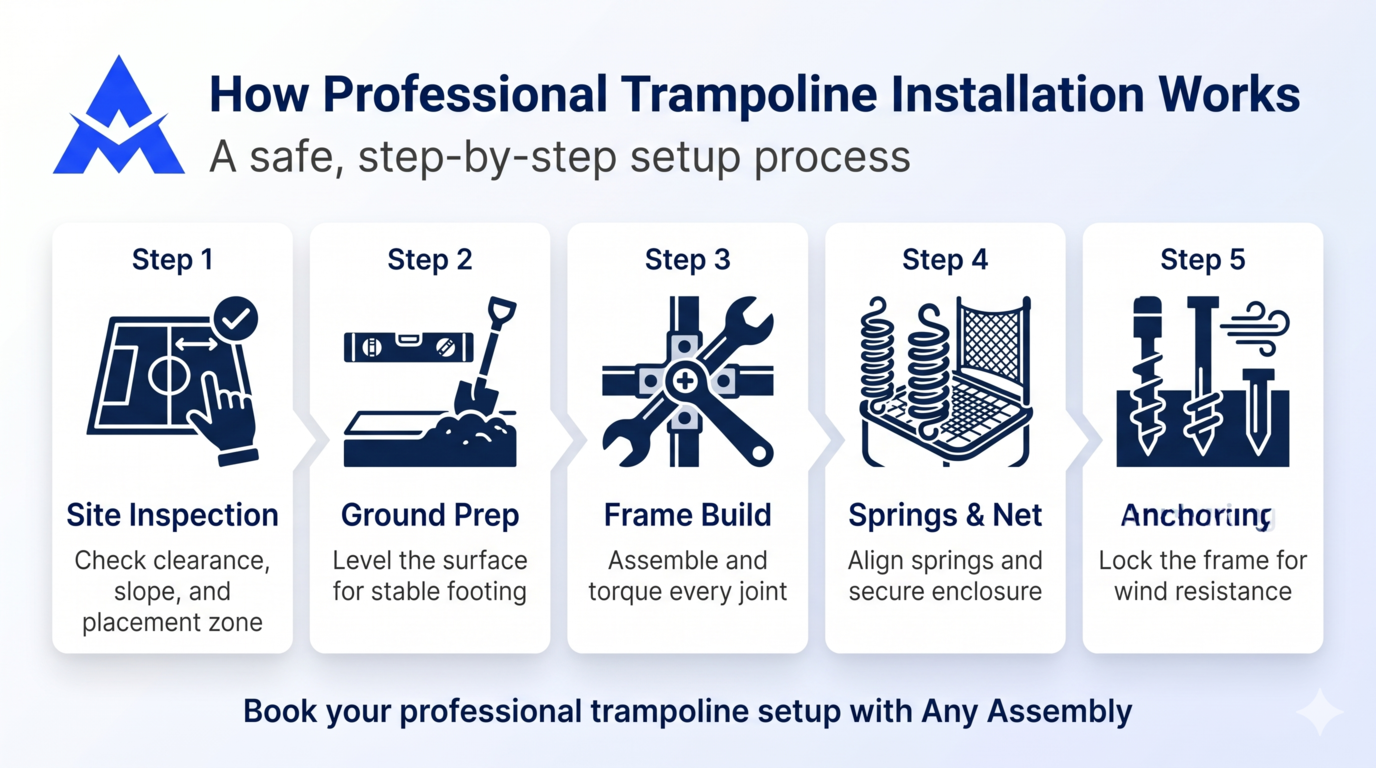
How Trampoline Assembly and Installation Works
Trampoline assembly and installation follows a structured process that begins with site evaluation and ends with safety testing. Technicians inspect the yard, prepare the surface, build the frame, attach springs and the jumping mat, install the enclosure, and anchor the unit. Each stage is verified before the trampoline is approved for use.
Here is what a typical installation includes:
- Site inspection and clearance check for overhead branches and fences
- Ground leveling to prevent tilting and uneven bounce
- Frame assembly with torque-checked bolts and joints
- Spring installation using proper tools to maintain even tension
- Jumping mat fitting with correct V-ring alignment
- Safety enclosure setup with sealed entry points
- Anchoring with ground stakes, augers, or sandbag systems
- Final safety inspection and bounce test
Smaller backyards often need creative layout planning, similar to the strategies described in this resource on small yard big fun trampoline placement. Larger properties may allow for additional accessories like ladders, basketball hoops, or shaded canopies.
Common Trampoline Installation Mistakes That Cause Injuries
The most common trampoline installation mistakes include skipping anchoring, misaligning springs, leaving gaps in the enclosure, and placing the unit on uneven ground. These errors lead to instability, pinched fingers, falls, and structural failure. Even experienced DIYers often underestimate how much precision the process requires.
Many injuries trace back to rushed assembly. Springs hooked unevenly create dead spots that throw off balance mid-jump. Enclosure poles that are not fully seated can collapse inward during use. Trampolines placed on sloped lawns shift gradually, loosening hardware over time. Schools and community centers also report incidents linked to missing safety pads and worn anchors.
Professional installers follow checklists that catch these issues before they become hazards, which is why services such as trampoline assembly and installation are often chosen by safety conscious property managers.
How Proper Anchoring Improves Trampoline Safety
Proper anchoring keeps trampolines stable during high winds, heavy bouncing, and shifting weather. Anchors lock the frame to the ground, preventing tipping, sliding, and lift. Without secure anchoring, even a moderate gust can flip a trampoline, damaging property and creating serious safety hazards for nearby children and pets.
Common anchoring systems include:
- U-shaped ground stakes for firm soil
- Corkscrew or auger anchors for sandy or loose ground
- Sandbag or water bag anchors for paved or temporary setups
- Concrete-mounted anchors for permanent installations
Backyards in storm-prone regions usually require heavy-duty auger anchors. Community parks and daycare centers often combine multiple anchoring methods for extra security. Trained installers select the right system based on soil type, trampoline size, and local wind conditions.
Why Safety Standards Matter for Outdoor Trampolines
Safety standards matter because they define how trampolines are built, tested, and installed to minimize injury risk. Standards such as ASTM F381 outline construction requirements, padding coverage, frame strength, and enclosure design. Compliance ensures that trampolines meet baseline safety expectations for residential and commercial use.
Professional installers stay current with the ASTM F381-16 standard for trampoline safety, which guides everything from spring coverage to enclosure netting. They also follow guidance from the trampoline regulations in the United States overview, which helps homeowners and facility managers understand local compliance expectations. Schools and daycare centers especially benefit from documented installation practices since they often face insurance and inspection requirements.
Mistakes to Avoid During Trampoline Assembly
Avoid rushing assembly, skipping the instruction manual, using mismatched parts, and ignoring torque specifications. These shortcuts weaken the structure and create hidden hazards that surface only after weeks of use. Careful, methodical assembly is what separates a safe trampoline from a risky one.
Watch out for these frequent missteps:
- Tightening bolts unevenly, which warps the frame
- Installing springs without a proper spring puller tool
- Forgetting to attach safety padding over the spring area
- Leaving the enclosure net loose or unzipped at the entry
- Placing the trampoline too close to fences, sheds, or trees
Homeowners moving equipment between properties often run into these issues during reassembly. A helpful reference is this playset relocation cost guide for DC, Maryland, and Virginia, which highlights how relocation and reassembly should be handled with the same care as the original install.
How to Prepare Your Yard Before Installation
Preparing your yard before installation involves clearing debris, leveling the ground, checking overhead clearance, and identifying the safest placement zone. A well-prepared site allows installers to work efficiently and ensures the trampoline sits evenly with proper drainage and airflow underneath.
Use this quick preparation checklist:
- Remove rocks, branches, toys, and lawn furniture from the area
- Identify a flat zone with at least nine feet of overhead clearance
- Keep the trampoline several feet away from fences, walls, and trees
- Check for underground utilities before driving anchors
- Ensure good drainage so water does not pool under the mat
For homes that also have basketball setups nearby, services like portable hoop installation can be scheduled alongside trampoline installation to streamline backyard upgrades in a single visit.
Get Professional Trampoline Assembly and Installation Support
Any Assembly provides safe, anchored, and properly aligned trampoline setups for families, schools, and community spaces. Our trained installers handle frame assembly, spring tensioning, enclosure fitting, and ground anchoring with care, so your trampoline stays stable and dependable for years. We also support relocation and disassembly when you move or upgrade.
If you are creating a complete activity-friendly home, you may also appreciate guidance on home office furniture setup for better comfort, storage, and productivity, tips on how to move office furniture safely without damaging floors and walls, or this heavy furniture disassembly guide for beds, wardrobes, and sectionals.
Reach out to Any Assembly today to schedule your professional trampoline installation.
Few Easy Steps to Get Your Trampoline Assembled
Do not fret any longer about your trampoline assembly
Pick up the phone and give us a call today. We have your back!
Tells us your needs
Please fill up the contact form and provide us with as many details of your project as possible.
Approve Estimate
Our experts will review your project needs and create a plan that works with your schedule. You will then have to review & approve the plan via email.
Project Kick-Off
Once you have approved our solution plan, we'll send professional installers who own just the right tools & equipment in their arsenal to complete your project.
Customer Service 24/7
We’d love to hear from you. Choose the most convenient method and we’ll get back to you as soon as we can.
Contact Us
Contact Us
2707 N Rolling Rd #109, Windsor Mill, Maryland 21244
+1(410) 493-4488
Trampoline Assembly Service near me
Service across Maryland, Pennsylvania, Washington DC, and Northern Virginia.
VA
Any Assembly Virginia
+1(703) 596-0086
DC
Any Assembly Washington
+1(202) 684-6782
PA
Any Assembly Pennsylvania
+1(267) 209-0710
Frequently Asked Questions
How long does trampoline assembly usually take?
Most standard backyard trampolines take two to four hours to assemble professionally. Larger rectangular or in-ground models may take longer due to anchoring, leveling, and enclosure work. Timing also depends on yard conditions and accessibility.
Do trampolines really need professional installation?
Yes, professional installation is strongly recommended because trampolines involve high-tension springs, heavy frames, and precise alignment. Trained installers reduce safety risks, prevent structural mistakes, and ensure the equipment is anchored correctly from the start.
How are trampolines anchored safely?
Trampolines are anchored using ground stakes, auger anchors, sandbags, or concrete mounts depending on soil and location. The right anchoring method keeps the frame stable during wind, heavy use, and seasonal weather changes.
What surfaces are best for trampoline setup?
Flat, level grass is the most common and safest surface for trampolines. Soft ground absorbs impact and allows secure anchoring, while concrete or uneven slopes require special anchoring solutions and protective mats.
Can one person move a trampoline?
Moving a trampoline usually requires at least two people due to its size and weight. Our professional team can handle the relocation for you.
Are trampolines safe for young children?
Trampolines can be safe for children when installed correctly, supervised by adults, and used one at a time. Safety enclosures, padded springs, and proper anchoring greatly reduce the risk of falls and collisions.
How does weather affect trampoline safety?
Strong winds, heavy rain, snow, and ice can damage trampolines or shift unanchored frames. Securing the trampoline with proper anchors and removing accessories during storms helps maintain safety and extends the equipment's lifespan.
Can a trampoline be relocated to a new yard?
Yes, trampolines can be disassembled and relocated, but the process should be handled carefully to protect the frame, springs, and enclosure. Professional installers can manage both disassembly and reassembly to ensure safe reinstallation at the new site.