

Gym Equipment Relocation Services for Fitness Centers Expanding Renovating or Moving Locations
Fully Licensed & Insured
Safety is our #1 Priority
Gym equipment relocation services help fitness centers move, expand, or renovate without damaging machines, floors, walls, cables, frames, weight stacks, or electrical components. The best relocation plan depends on equipment size, floor layout, access paths, moving distance, disassembly needs, facility schedule, and safety clearances. Each project shifts based on whether the space is a commercial gym, apartment fitness room, hotel, school, clinic, or corporate wellness area.
- Plan equipment moves well before renovation or expansion begins
- Disassemble and reassemble heavy fitness machines for safer transport
- Protect floors, walls, and doorways during every stage of relocation
- Use smart layout planning for safer commercial gym traffic flow
- Hire professional support to reduce downtime and equipment damage
Fitness Center Relocation Support for Safer Equipment Moves
Moving a fitness center sounds simple until your team faces heavy treadmills, loaded weight stacks, racks bolted to flooring, cable machines with long pulley systems, and doorways that barely clear a bench press. Add elevator weight limits, member access schedules, and renovation deadlines, and the project quickly turns stressful. Poor planning leads to scratched flooring, bent frames, damaged drywall, missing hardware, and weeks of delayed reopening.
Professional gym equipment relocation services solve these issues by handling disassembly, protected transport, staging, and reinstallation. Any Assembly works with gyms expanding, renovating, downsizing, upgrading, or moving to brand new locations.
Moving Plans Should Start Before Machines Leave the Floor
Good gym moves start weeks before a single machine is unplugged. Planning ahead prevents bottlenecks, schedule conflicts, missing hardware, and damaged equipment. A clear plan also keeps members informed and staff prepared for limited hours during the transition.
Before any lifting begins, your relocation plan should cover these items:
- A full equipment inventory with weights, dimensions, and condition notes
- Access path measurements including doorways, hallways, and elevators
- A timeline that matches the facility schedule and member traffic
- Disassembly requirements for racks, cable machines, and selectorized stacks
- Floor protection, padding, and dolly placement for heavy loads
- A reinstallation layout aligned with the new floor plan
Apartment fitness rooms and hotel gyms often need extra coordination because shared elevators and tight service corridors slow the process. Booking trusted commercial moving services early helps avoid last-minute surprises.
Heavy Cardio and Strength Equipment Need Different Handling
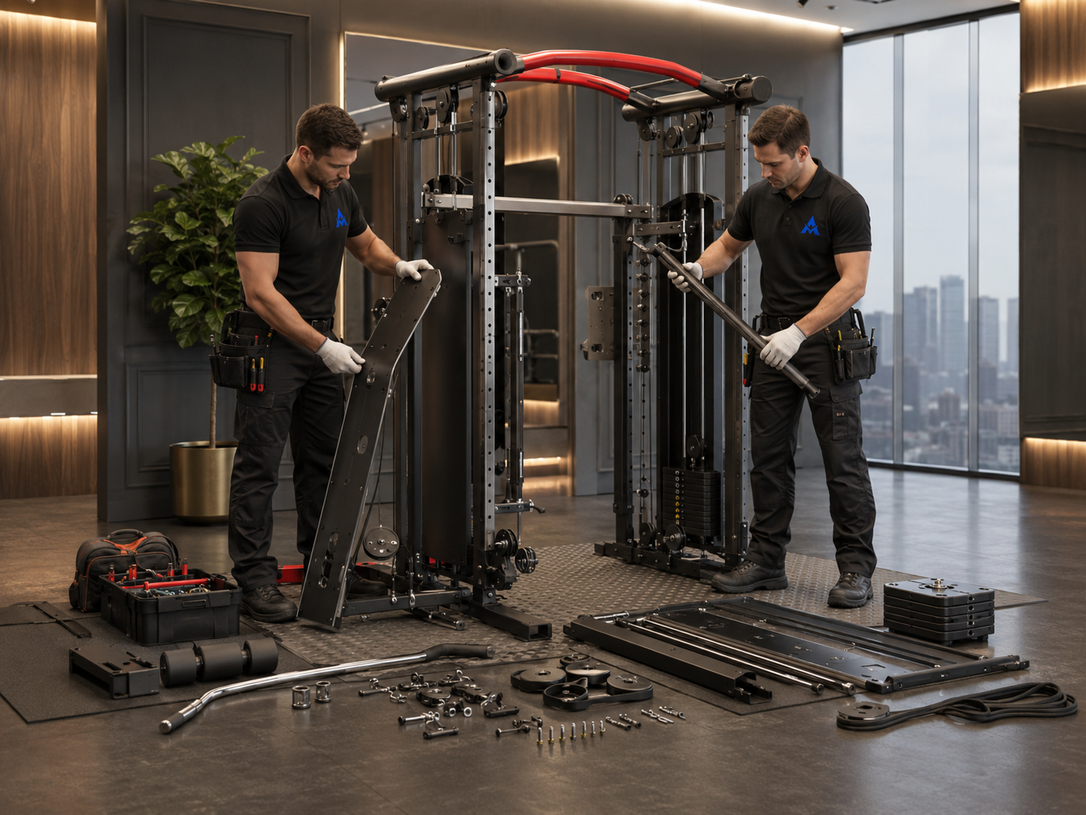
Cardio machines, strength systems, and free weight setups each require their own moving method. Treadmills carry sensitive electronics and motors. Weight stacks must be secured to prevent shifting. Power racks and cable crossovers often need full breakdown before they leave the floor.
Here is a quick reference for how different equipment types are typically handled during relocation:
| Equipment Type | Common Handling Method | Key Risk Without Pros |
|---|---|---|
| Treadmills | Lock deck, remove console, strap motor base | Cracked deck, electrical damage |
| Ellipticals | Detach arms, pedals, flywheel cover | Bent frame, lost hardware |
| Selectorized weight stacks | Remove plates, secure cables | Snapped cables, dented stacks |
| Power racks and rigs | Full disassembly of uprights and crossmembers | Bent steel, scratched flooring |
| Cable crossovers | Release tension, coil cables, label pulleys | Tangled cables, misaligned reinstall |
| Benches and dumbbells | Pad, strap, and dolly transport | Torn upholstery, foot injuries |
Many gym owners read about gym setup mistakes and realize that careful handling during a move is just as important as the original install. Trained crews follow torque specs, cable routing diagrams, and balance points the same way heavy item movers approach safes or pianos.
Renovation Projects Require Careful Equipment Staging
Renovations rarely allow equipment to stay on the gym floor. Machines need to move out of the work zone, get protected from dust and debris, and return without scratches or missing parts. Smart staging keeps the renovation timeline on track and protects every machine in the process.
Strong staging plans usually include:
- A protected storage area inside or near the facility
- Pallets, blankets, and shrink wrap for vulnerable surfaces
- Labeled hardware bags tied to each machine
- A staging map that matches the reinstallation sequence
- Clear separation between contractor zones and equipment storage
Schools, recreation centers, and physical therapy clinics often run renovations in phases. Staging equipment by zone lets one area stay open while another gets new flooring, paint, or mirrors. Reliable fitness equipment reinstallation keeps each phase moving without long shutdowns.
Expansion Layouts Work Better With Smart Placement Planning
Plan Traffic Flow Before You Place Machines
Expansion projects offer a rare chance to fix old layout problems. Crowded cardio rows, tight squat rack spacing, and awkward stretching zones all become easier to redesign. Strong planning considers sightlines, mirror placement, outlets, and natural traffic flow between zones.
Match Layout to Member Behavior
Corporate wellness rooms and hotel gyms tend to favor compact, multi-use stations. Community gyms and commercial centers usually need clear cardio, strength, and functional zones. Mapping how members move between zones reduces collisions, wait times, and equipment crowding.
Respect Accessibility From the Start
Following fitness ADA compliance guidelines during layout planning saves expensive rework later. Wider pathways, accessible benches, and proper clearance around adjustable machines benefit every member.
Commercial Gym Moves Need Safer Disassembly and Reassembly
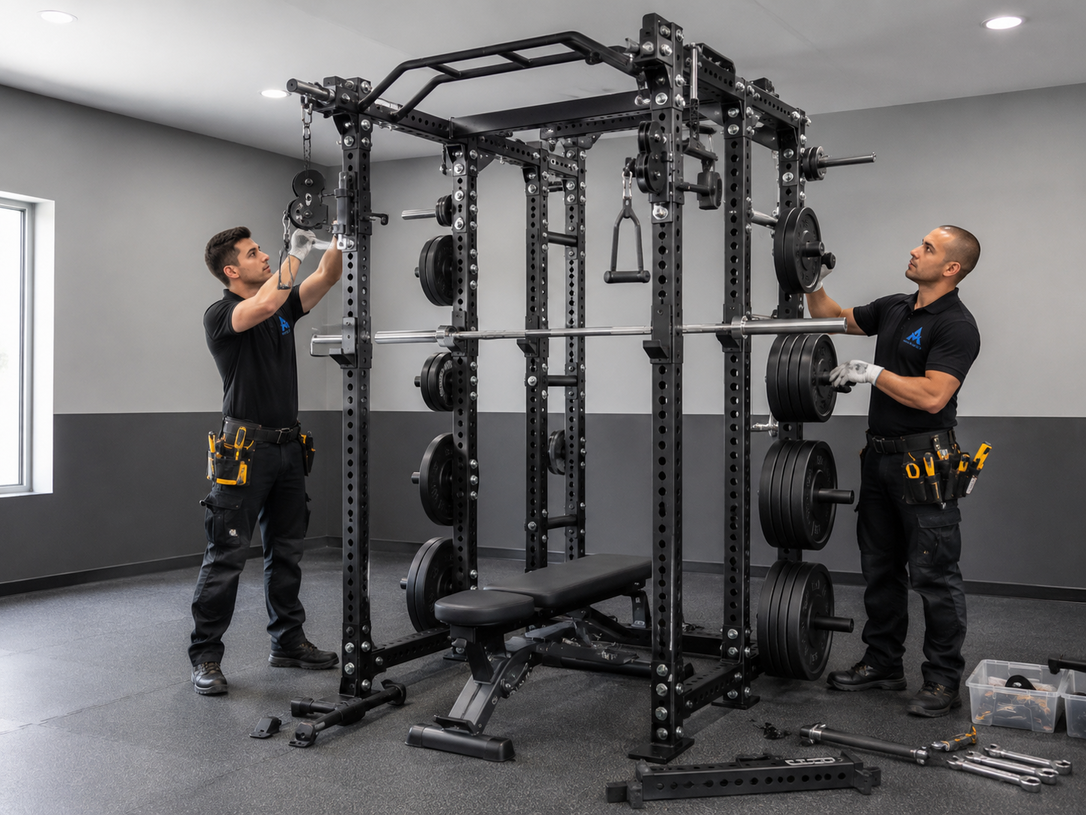
Heavy commercial machines almost always require disassembly before they leave the floor. Power racks, functional trainers, Smith machines, and plate-loaded stations have bolts, cables, and counterweights that must come apart in a specific order. Reassembly then follows the reverse sequence with proper torque and alignment.
Gym equipment relocation planning means reviewing the equipment list, machine size, disassembly needs, moving path, flooring, access points, temporary storage, safety clearances, and reinstallation layout before fitness equipment is moved. This planning step is where experienced crews separate themselves from general movers. Skilled fitness equipment installation teams keep hardware organized, photograph cable routing, and confirm every bolt is torqued to spec during reassembly.
Floors, Walls, Doorways, and Elevators Need Protection
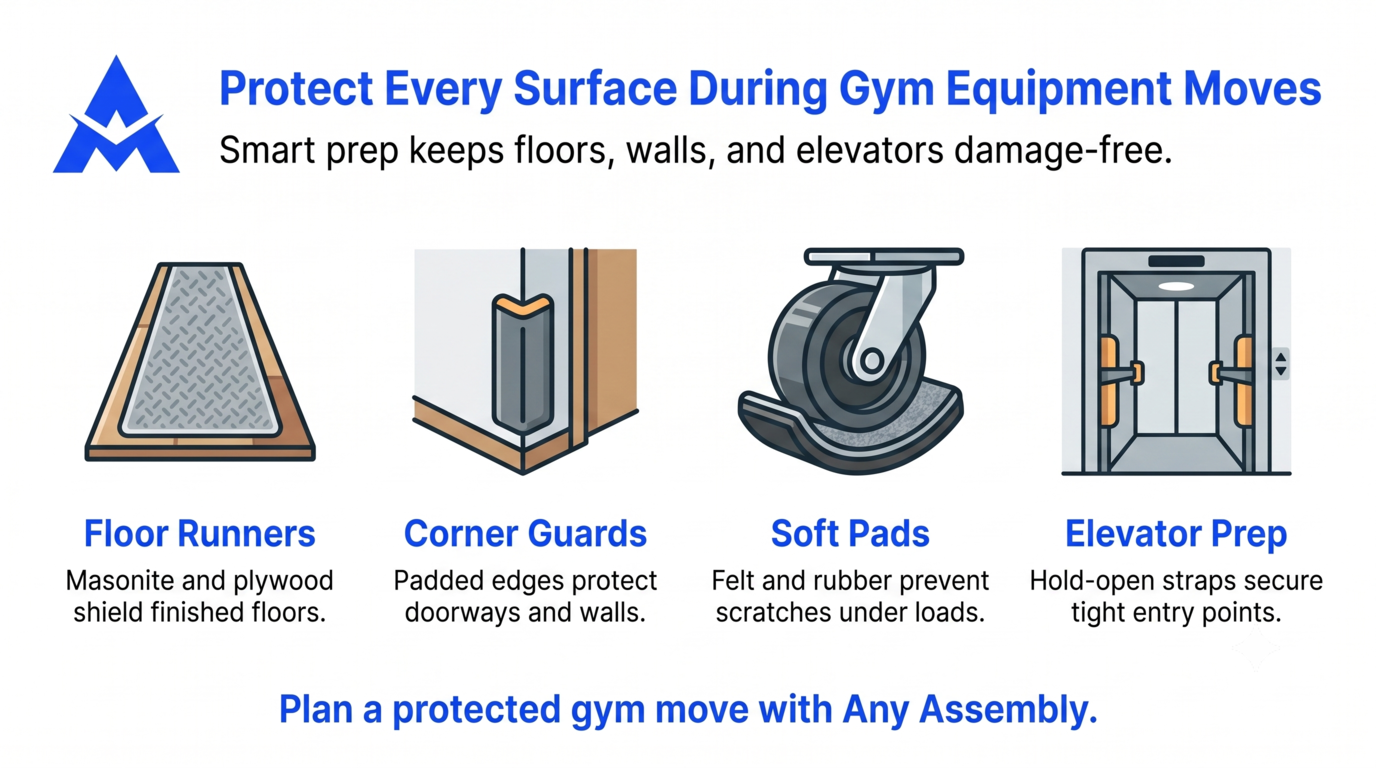
Damage during a gym move is rarely the fault of the machine. Most damage happens at corners, thresholds, elevator frames, and rubber flooring seams. Protecting the building is just as important as protecting the equipment.
A protected move usually includes:
- Masonite or plywood runners across finished floors
- Corner guards on doorways, walls, and elevator entries
- Felt or rubber pads under feet, casters, and dollies
- Door stops and hold-open straps for safer carry paths
- Shrink wrap and blankets around painted or upholstered surfaces
Apartment communities and multi-family amenity spaces often have strict damage policies. Confirming mover liability protection before move day gives property managers extra peace of mind.
Accessibility and Clearances Matter After Equipment Is Reinstalled
Keep Safe Spacing Around Every Station
Once machines are back in place, clearances determine how safely members can train. Treadmills need rear safety space. Squat racks need room for spotters. Cable machines need full arc clearance for attachments.
Follow Manufacturer and Regulatory Guidance
Manufacturer manuals usually list minimum spacing for each machine. Combining those specs with fitness product regulations and local code keeps the facility safer and easier to insure.
Test Every Machine Before Reopening
Every reinstalled machine should be tested under load before members return. Belts, cables, pulleys, electronics, and safety stops all deserve a full check. A reliable gym equipment assembly crew handles this testing as part of the reinstall.
Professional Relocation Helps Fitness Centers Reopen Faster
Downtime is expensive. Every closed day means lost memberships, refund requests, and frustrated staff. Professional relocation crews compress the timeline by working in parallel, using the right equipment, and avoiding the small mistakes that cause big delays.
Hiring trained professional assembly services typically delivers:
- Faster disassembly through experience and proper tools
- Fewer damage claims thanks to protective materials
- Cleaner reinstalls with torque checks and alignment
- Better layout adjustments based on real gym flow
- Shorter member disruption and faster reopening
Private training studios and corporate wellness facilities especially benefit because their schedules cannot absorb long closures. Specialized equipment relocation support keeps the project predictable from start to finish.
Move Your Gym Equipment With Any Assembly
Any Assembly handles gym equipment relocation services with protected moving paths, careful disassembly, organized hardware, safe transport, and accurate reassembly. Our crews support renovation staging, expansion layouts, accessibility clearances, and faster reopening for fitness centers of every size. Beyond gym work, we also help with furniture moving storage, basketball hoop lighting solutions, storage cabinet placement, and furniture assembly expectations for full-facility projects.
Ready to plan your next move? Schedule gym relocation with our team today.
FREQUENTLY ASKED QUESTIONS
What is included in gym equipment relocation services?
Most services include planning, disassembly, padding, transport, staging, and reinstallation. Crews also protect floors, walls, and doorways during the move. Final testing confirms every machine works safely before reopening.
Can commercial gym equipment be moved during renovation?
Yes, equipment can be moved and staged during renovation work. Machines are usually relocated to a protected area, covered against dust, and returned once finishes are dry. Phased moves help keep parts of the gym open.
Should treadmills and weight machines be disassembled before moving?
Heavy machines almost always need partial disassembly. Treadmills usually require console removal and deck locking, while weight machines need plates secured and cables released. This prevents frame damage and electronic failure.
How do movers protect floors during gym equipment relocation?
Crews use masonite, plywood runners, felt pads, and rubber wheel dollies to spread weight and prevent gouges. Doorways and corners get padded guards. Rubber gym flooring is also lifted carefully to avoid tearing seams.
How should a fitness center plan equipment placement after expansion?
Start with a layout map that includes traffic flow, safety clearances, outlets, and mirrors. Group machines by training zone and leave space for spotters and accessible pathways. Test the flow with staff before final placement.
What makes commercial gym relocation different from home gym moving?
Commercial moves involve heavier machines, more cables, stricter schedules, and tighter compliance requirements. Crews must coordinate with property managers, contractors, and members. The scale and liability are much greater than a home setup.
Can professional relocation help reduce gym downtime?
Yes, experienced crews compress timelines by working in parallel and avoiding common mistakes. Faster disassembly, protected transport, and accurate reinstallation cut days off the project. Members return sooner with fully tested equipment.
When should a fitness center contact Any Assembly for relocation help?
Reach out as early as possible, ideally weeks before the planned move or renovation. Early planning allows proper scheduling, accurate quotes, and smoother coordination with contractors. Last-minute requests can still be handled when crews are available.
To Ease Your Move Or Redecorate Your Home Space
Follow a Few Easy Steps
Tells us your needs
Please fill up the contact form and provide us with as many details of your project as possible.
Approve Estimate
Our experts will review your project needs and create a plan that works with your schedule. You will then have to review & approve the plan via email.
Project Kick-Off
Once you have approved our solution plan, we'll send professional installers who own just the right tools & equipment in their arsenal to complete your project.
Customer Service 24/7
We’d love to hear from you. Choose the most convenient method and we’ll get back to you as soon as we can.
Contact Us
Contact Us
2707 N Rolling Rd #109, Windsor Mill, Maryland 21244
+1(410) 493-4488
VA
Any Assembly Virginia
+1(703) 596-0086
DC
Any Assembly Washington
+1(202) 684-6782
PA
Any Assembly Pennsylvania
+1(267) 209-0710