

Office Cubicle Installation Guide for Businesses Expanding or Relocating
Fully Licensed & Insured
Safety is our #1 Priority
Expanding or relocating an office is the right time to plan cubicle installation carefully, not wing it and hope the floor somehow behaves. The biggest problems usually come from poor timing, bad measurements, missing furniture details, and installation schedules that do not match the move. That is when projects stall, teams lose work time, and simple setup jobs turn into expensive reruns.
A smart cubicle installation plan solves those issues early by matching layout, workflow, growth, and installation timing before furniture arrives. When businesses want the setup done correctly with less disruption, our team make the whole process smoother, faster, and a lot less chaotic.
What Should Businesses Know Before Installing Office Cubicles
Businesses should know that office cubicle installation starts long before panels, desks, and storage units arrive. The most successful projects begin with accurate measurements, a realistic headcount, department needs, power and data planning, and a clear installation sequence that fits daily operations.
Office cubicle installation is the process of assembling and positioning modular workstations, panels, desks, and related components so the workspace supports privacy, circulation, productivity, and future changes. In plain English, it is not just furniture assembly. It is workspace planning with consequences.
Before installation begins, decision-makers should confirm how many people need seats now, how many may join later, and which teams need more collaboration versus more separation. A sales group may need open communication, while finance or HR may need quieter work areas and better document storage.
It also helps to review furniture lifespan and asset planning using practical guidance on furniture and equipment standards, especially if the project includes replacing older systems instead of reusing them. At the same time, access and clearance should align with ADA design standards so walkways, turns, and shared spaces remain functional and inclusive.
A few basics should be locked in early:
- Final headcount and near-term hiring plans
- Department workflow and adjacency needs
- Floor measurements, columns, doors, and clearance points
- Power, internet, and equipment placement
- Storage, meeting, and shared support areas
- Installation dates tied to move or expansion milestones
That groundwork saves time later because cubicle systems are modular, but they are not magic. If the plan is off, the install will expose it fast.
When Is the Right Time to Install New Office Cubicles
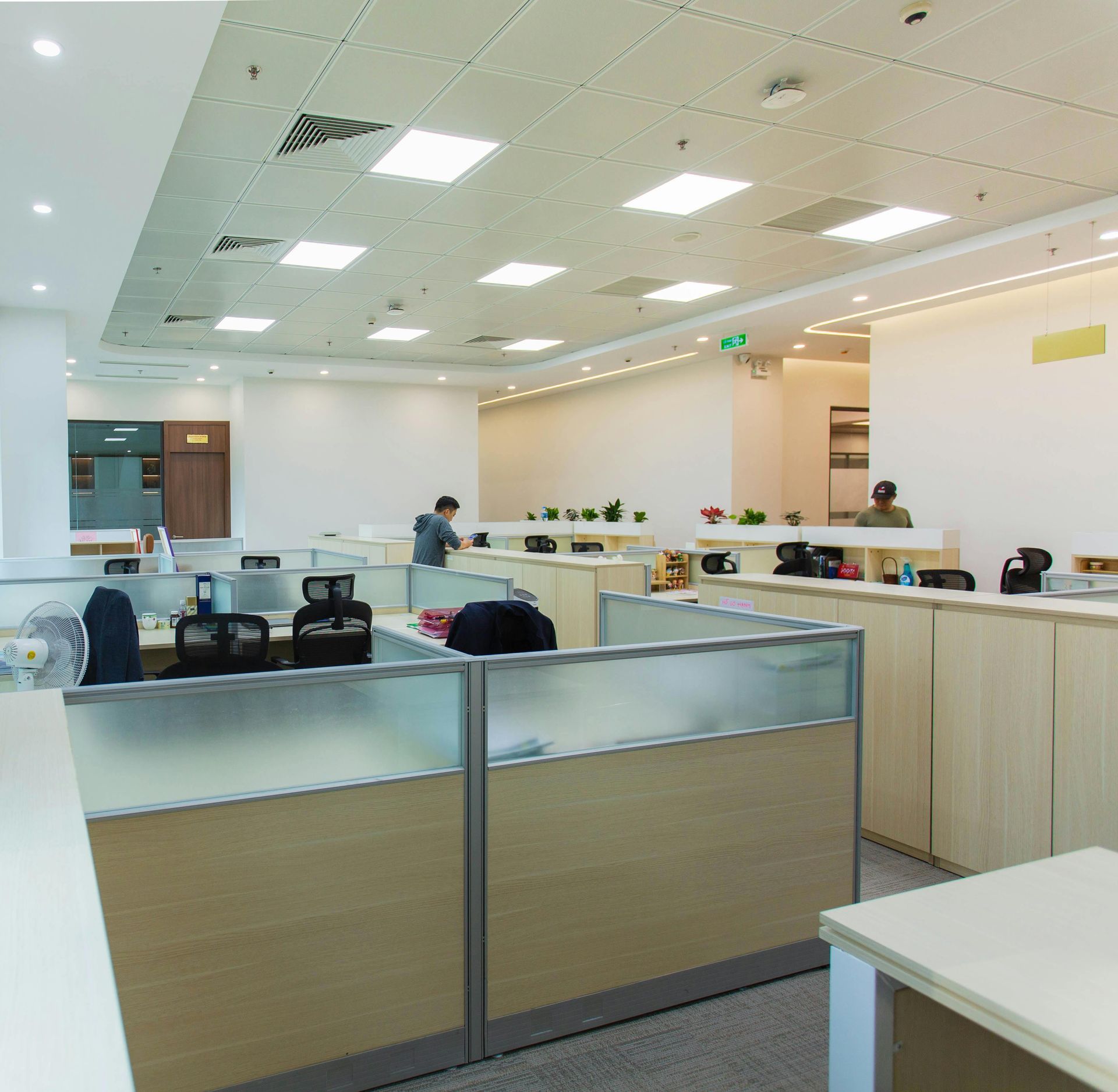
The right time to install new office cubicles is after the layout is approved and before employees fully occupy the space. For most businesses, that means scheduling installation after flooring, paint, and core utility work are complete but before full IT deployment and team move in.
Timing matters because cubicle installation sits in the middle of several moving parts. If installers arrive too early, other trades can block access or damage finished components. If they arrive too late, staff may move into an unfinished office and lose productive hours while panels, desks, and cables are still being sorted out.
This is also why many companies bring in pros instead of relying on internal staff or a general mover. Professional teams reduce rework, prevent setup errors, and keep the project moving, which is one reason many businesses turn to office furniture assembly services when deadlines actually matter.
A good rule is to set the cubicle installation date only after these items are confirmed:
- Final floor plan approval
- Delivery window for all furniture components
- Building access rules and loading times
- Electrical and data readiness
- IT and move-in sequencing
- Punch-list time for adjustments after setup
In growing offices, the best timing is often before the team feels squeezed. Waiting until people are already stacked elbow-to-elbow is the corporate version of fixing the roof after monsoon season.
How Do You Plan Cubicle Layouts for Growth
Cubicle layouts for growth should be planned around future headcount, circulation, department function, and flexibility. A layout that only fits today’s team often becomes inefficient fast, so smart businesses leave room for expansion, reconfiguration, and changing work patterns from the start.
That means planning more than rows of workstations. Businesses should think about who works together, who needs acoustic separation, where managers sit, and how traffic moves through the space. A layout that looks efficient on paper can feel cramped and disruptive once people, chairs, monitors, and storage actually show up.
Many expanding companies also need more than desk areas alone. Break zones, wellness rooms, and support spaces can become part of the next phase, especially in offices investing in workplace amenities like an office gym.
For scalable planning, it helps to study modular workstation ideas from systems like Steelcase Workstation and broader workplace system options from Herman Miller. These examples show how teams can adapt layouts without starting from scratch every time the headcount changes.
Good growth planning usually includes:
- Extra capacity for projected hires
- Wider circulation paths in high-traffic zones
- Shared storage where private storage is limited
- Team clusters based on communication needs
- Space for printers, meeting points, and support stations
- Reconfigurable layouts instead of fixed one-time setups
The goal is a workspace that works now and still works six or twelve months later.
Which Cubicle Systems Work Best for Expanding Teams
The best cubicle systems for expanding teams are modular systems that can be reconfigured, added to, or reduced without rebuilding the entire office. Businesses usually benefit most from flexible workstation systems that support consistent parts, scalable layouts, and efficient installation.
Modular systems are especially useful when a company is hiring in phases, testing team structures, or working with a mixed office footprint. Bench-style layouts may suit collaborative departments, while panel-based cubicles may work better for focused roles that need more privacy.
For smaller footprints or temporary growth, compact workspace solutions can also help businesses avoid overbuilding. Looking at small office furniture ideas for tighter spaces can help teams think through practical layouts when square footage is limited.
The best system is not always the fanciest one. It is the one that fits the team’s workflow, integrates with the room dimensions, and can be adjusted later without creating a Frankenstein office full of mismatched parts.
What Mistakes Slow Down Office Cubicle Installation
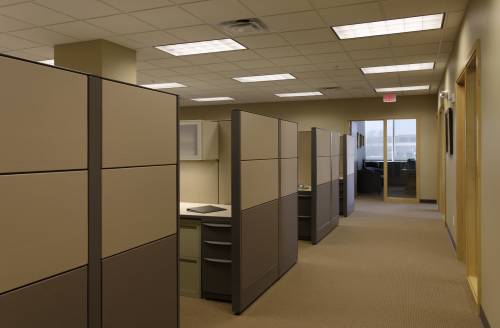
Office cubicle installation usually slows down because of missing measurements, incomplete deliveries, poor sequencing, unclear floor plans, and last-minute changes. Most delays are preventable when businesses confirm details early and coordinate furniture, access, IT, and installation as one connected project.
One common mistake is treating cubicle installation like a simple drop-off. It is not. Installers need the correct inventory, building access, floor plans, and a clean path to work. Another delay happens when businesses finalize layouts before thinking through ergonomics and day-to-day use. After installation, teams still need comfortable workstation setup, which is why guidance on office workstation setup tips to reduce employee fatigue and boost productivity becomes relevant once the furniture is in place.
Another issue is forgetting the broader setup scope. Growing offices often need desks, shelving, conference furniture, and storage assembled along with cubicles, so it helps to work with teams that understand professional office furniture assembly for home and business as part of the bigger picture.
The most common slowdowns include:
- Inaccurate room measurements
- Missing or damaged components at delivery
- Unclear labeling for panels and parts
- Building access limits not shared in advance
- IT setup scheduled out of order
- Department changes after installation starts
Tiny mistakes at the planning stage have a weird talent for becoming big delays on install day.
How Does Relocation Change Cubicle Planning
Relocation changes cubicle planning by adding disassembly, transport, reconfiguration, and move sequencing to the project. Businesses moving into a new office need to decide what should be reused, what should be replaced, and how existing cubicle systems will fit the new floor plan before move day arrives.
A relocated office rarely matches the old one exactly. Ceiling heights, column placement, window lines, hallway widths, and department needs often change, so an old cubicle layout cannot just be copied and pasted into a new space.
That is why reuse decisions matter early. Existing systems may need office furniture disassembly before they can be moved and reinstalled properly. Businesses should also review broader moving logistics through practical resources on what to expect when moving offices and how to prepare, especially when multiple vendors and internal teams are involved.
Relocation also affects monitors, docking stations, printers, and other tech-heavy setups. Protecting those assets during transition is part of the workflow, so planning around moving electronics and computer equipment safely helps prevent damage and setup delays.
Space Planning Tips for Cubicle Installation Projects
Good space planning for cubicle installation means balancing seat count, circulation, privacy, lighting, storage, and shared functions in one workable layout. The best plan supports how people actually move and work in the office, not just how many cubicles can physically fit on the floor.
A packed floor plan may look cost-effective, but it often creates noise, bottlenecks, poor access, and frustration. On the other hand, a layout with proper spacing improves movement, sightlines, and daily comfort. That matters even more in offices adding new departments or mixing open areas with semi-private workstations.
Businesses should also think beyond cubicles. Shared use zones, touchdown areas, and support rooms often matter just as much as desk count. Companies managing a broader office setup can benefit from reviewing the full range of assembly and setup services available when multiple spaces are being activated at once.
How to Keep Cubicle Installation On Schedule
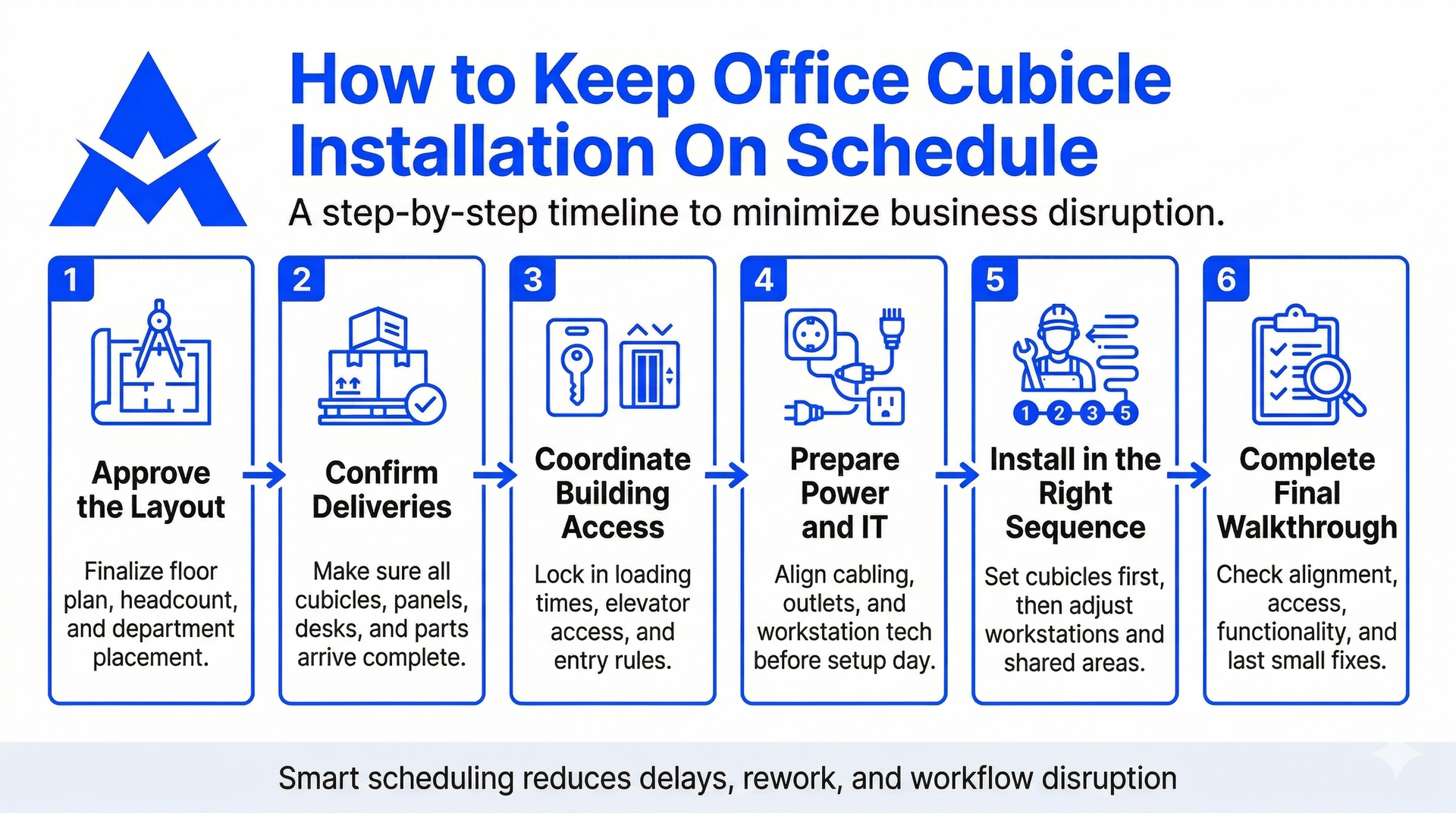
To keep cubicle installation on schedule, businesses need one clear plan that connects layout approval, deliveries, building access, installation, IT setup, and final walkthroughs. Projects stay on track when responsibilities are assigned early and changes are controlled instead of made midstream.
The simplest way to avoid delays is to confirm who owns each piece of the project. Someone should approve the floor plan, someone should verify deliveries, someone should manage building coordination, and someone should handle internal move timing. When nobody owns those details, the schedule gets messy fast.
It also helps to build in a short adjustment window after installation. Even strong plans usually need minor panel shifts, cable corrections, or seating changes once teams see the space in real use. Leaving a little room for that is smart project management, not pessimism.
Need Help With Office Cubicle Installation?
If your business is expanding, relocating, or reworking office space for a growing team, Any Assembly can help keep the cubicle installation process organized, accurate, and efficient. From layout execution and workstation setup to project coordination and day-to-day workflow considerations, professional support helps reduce costly delays and mid-project surprises.
Businesses across Maryland, Washington DC, Delaware, Pennsylvania, and Northern Virginia often need more than cubicles alone. Some projects also involve home-based executive workspaces, specialty recreational setups, or larger commercial environments, which is why services related to home office furniture setup, specialty installation projects, and broader commercial service support may come into play as operations evolve.
When you are ready to hire a team that understands office expansion, relocation logistics, and professional office cubicles installation service, reach out through Any Assembly’s contact page. Whether your office is in Baltimore, Rockville, Bethesda, Arlington, Alexandria, Wilmington, Harrisburg, or nearby service areas, the goal is the same: get the space set up correctly so your team can get back to work without the usual install-day circus.
Key Takeaways
- Cubicle installation goes smoother when businesses confirm headcount, measurements, department needs, circulation paths, and power or data requirements before furniture arrives.
- Layout planning should account for future hiring, workflow between teams, shared support areas, and accessible movement through the office, not just maximum seat count.
- Relocation adds extra layers like disassembly, transport, reuse decisions, tech handling, and new-floor constraints, so move sequencing matters early.
- The right cubicle system is usually modular, scalable, and easier to reconfigure as teams change instead of something that locks the office into one rigid layout.
- Hiring Any Assembly helps reduce install delays, setup mistakes, and workflow disruption while keeping expansion and relocation projects more organized from start to finish.
FREQUENTLY ASKED QUESTIONS
How long does office cubicle installation usually take?
Most cubicle installation projects take anywhere from several hours to a few days depending on the number of stations, the system type, and site access. Larger offices or projects with reconfiguration, IT coordination, or relocation steps usually take longer.
Can businesses reuse cubicles during an office move?
Yes, many businesses can reuse cubicles during a move if the systems are still in good condition and fit the new layout. The key is confirming dimensions, compatibility, and whether parts are complete before move day.
How early should a company plan cubicle installation?
Businesses should start planning as early as possible, ideally once expansion or relocation becomes likely. Early planning gives enough time for layout decisions, ordering, building coordination, and installation scheduling.
Can cubicle installation happen after business hours?
Yes, many installation teams can work after hours or in phases to reduce disruption. This is often the best option for active offices that need to keep operations running during the project.
How much space should be left between cubicles?
The right spacing depends on traffic flow, chair movement, storage access, and accessibility needs. Businesses should leave enough room for people to move comfortably without creating tight corners or blocked pathways.
Do cubicle walls affect lighting and workflow?
Yes, cubicle height and placement can affect both natural light and communication. Taller panels may improve focus and privacy, while lower panels can support visibility and team interaction.
What information do installers need before setup day?
Installers usually need an approved floor plan, accurate measurements, delivery details, building access instructions, and a clear contact person. They may also need notes about power, data, elevators, and any existing furniture that must be moved first.
How can businesses reduce disruption during office expansion or relocation?
The best way is to phase the work, confirm responsibilities early, and align furniture setup with move and IT schedules. Professional coordination also helps keep teams productive while the space changes around them.


To Ease Your Move Or Redecorate Your Home Space
Follow a Few Easy Steps
Tells us your needs
Please fill up the contact form and provide us with as many details of your project as possible.
Approve Estimate
Our experts will review your project needs and create a plan that works with your schedule. You will then have to review & approve the plan via email.
Project Kick-Off
Once you have approved our solution plan, we'll send professional installers who own just the right tools & equipment in their arsenal to complete your project.
Customer Service 24/7
We’d love to hear from you. Choose the most convenient method and we’ll get back to you as soon as we can.
Contact Us
Contact Us
2707 N Rolling Rd #109, Windsor Mill, Maryland 21244
+1(410) 493-4488
VA
Any Assembly Virginia
+1(703) 596-0086
DC
Any Assembly Washington
+1(202) 684-6782
PA
Any Assembly Pennsylvania
+1(267) 209-0710