

Storage Shed Installation Mistakes That Lead to Structural Issues Over Time
Fully Licensed & Insured
Safety is our #1 Priority
Storage shed installation mistakes usually lead to structural issues when the shed starts on a weak foundation, is anchored incorrectly, or goes up out of square. Those early errors often turn into sagging rooflines, shifting walls, sticking doors, and moisture damage over time. What looks like a minor shortcut on installation day can become a repair bill a season or two later, especially after heavy rain, freeze-thaw cycles, or strong wind.
The good news is that most long-term shed problems are preventable with careful planning, correct setup, and professional installation. For homeowners, renters, landlords, property managers, and business owners, that makes the installation process just as important as the shed itself.
What Causes Long Term Problems in Shed Installation
Long-term shed problems usually begin before the first wall panel is fastened. Poor site selection, rushed ground preparation, bad measurements, and skipped planning steps create stress points that slowly weaken the structure, even if the shed looks fine right after assembly.
Planning mistakes happen early
Many structural failures start with the wrong footprint, not the wrong screw. If the shed is too close to a fence, built on a slope, or placed where runoff collects, the structure will fight those conditions every day. Before choosing a model, it helps to compare sizes with an outdoor storage dimensions reference and review local placement rules with a shed permit guide.
The yard around the shed matters too
A shed should work with the rest of the property, not compete with it. If you are also planning seating, pathways, or nearby features, these patio set assembly tips for outdoor spaces can help you think through spacing, circulation, and access. Good layout decisions reduce future water pooling, blocked doors, and awkward clearance.
How Does a Poor Foundation Affect Shed Stability
A poor foundation affects shed stability by allowing the floor system to settle, twist, or hold moisture. Once the base shifts, the walls and roof follow. That is why many shed foundation problems show up as door issues, roof gaps, or floor softness rather than one dramatic failure.
A shed foundation is the load-bearing base beneath the structure. It keeps the floor level, supports the weight of stored items, and separates the shed from ground moisture.
Why level support matters
If one corner sinks, the entire frame starts carrying weight unevenly. Over time, fasteners loosen, panels separate, and the roof can begin to pull out of alignment. This is especially common on soft soil, grass, or fill dirt that was never compacted.
Warning signs of a failing base
- Doors scrape, stick, or stop latching properly
- The floor feels soft, bouncy, or uneven
- Wall panels show gaps at the corners
- Roof seams no longer sit flush
- Water collects under or inside the shed
When owners in places like Baltimore, Rockville, or Harrisburg notice these symptoms, the shed often needs more than a simple adjustment. The base usually needs correction first.
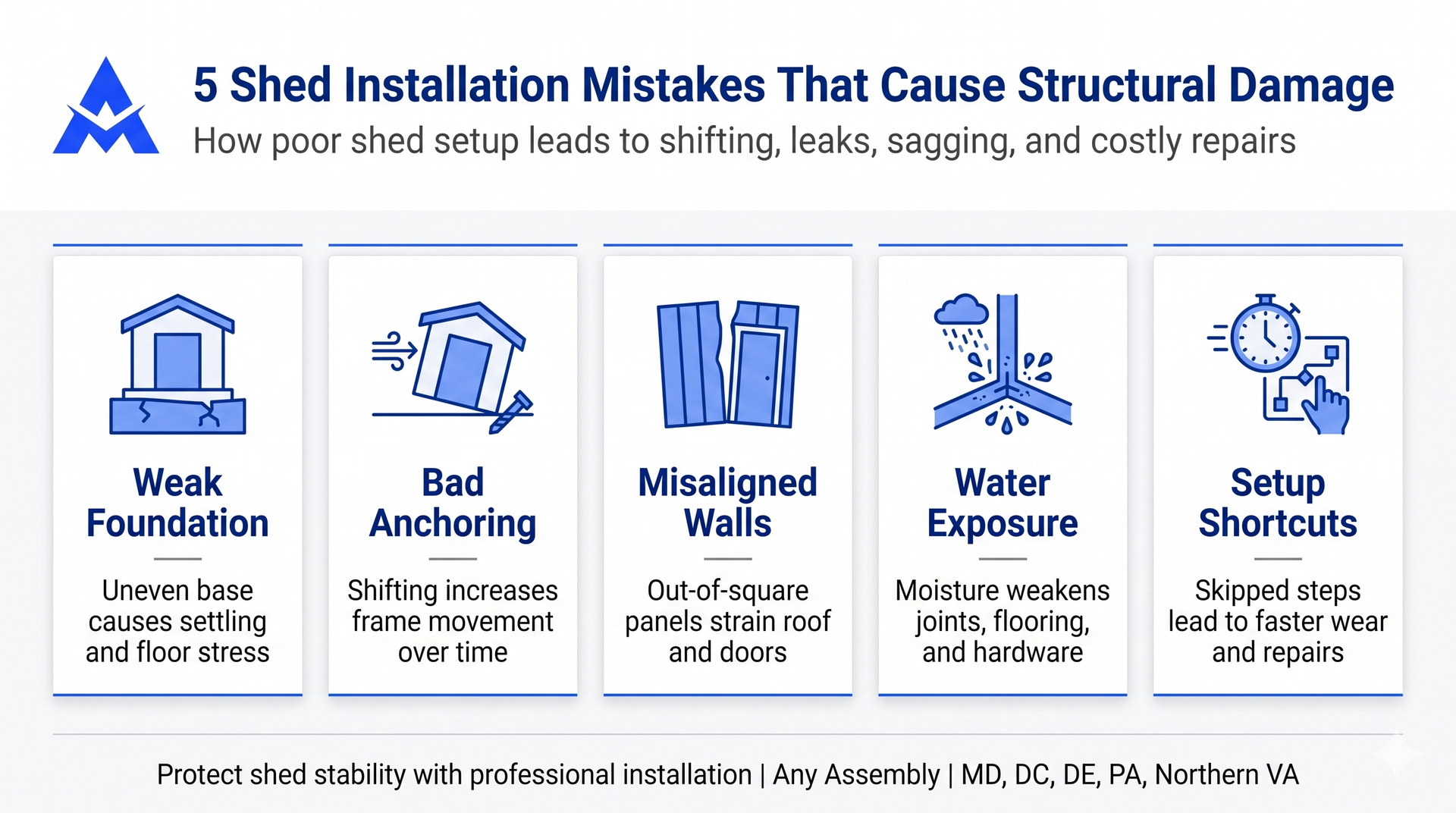
Which Shed Installation Mistakes Lead to Structural Damage
The shed installation mistakes most likely to cause structural damage are building on unlevel ground, assembling out of sequence, over-tightening or under-tightening hardware, skipping bracing, and failing to square the walls before the roof goes on. Small errors compound quickly once the shed is exposed to weather.
The most damaging mistakes
- Building directly on grass or bare soil
- Skipping measurements for squareness
- Forcing wall panels into place
- Installing the roof before the frame is stable
- Leaving hardware loose to “fix later”
- Ignoring manufacturer spacing and anchor requirements
Why sequence matters
A shed is not just a collection of panels. It is a system where the floor, walls, roof, and doors rely on each other for balance. If the walls are not square, the roof will not sit evenly. If the roof is stressed, water entry becomes more likely.
Homeowners comparing DIY against professional storage shed installation often find that careful sequencing is one of the biggest differences between a shed that lasts and a shed that slowly warps.
Can Improper Anchoring Cause a Shed to Shift Over Time
Improper anchoring can cause a shed to shift over time, even when the shed is relatively small. Wind uplift, repeated vibration, uneven loading, and seasonal soil movement can all push an under-anchored structure out of position, which leads to frame stress and faster wear.
Why anchoring is more than wind protection
Anchoring does not just protect against a big storm. It helps the shed resist subtle movement that happens month after month. According to general outdoor structure safety guidance, exterior products perform better when stability and secure setup are treated as core safety issues rather than optional extras.
What shifting usually looks like
- One side of the shed settles or drifts
- Door frames rack out of square
- Fastener holes widen over time
- Roof panels separate at the seams
- Corners lift slightly during wind events
Proper anchors should match the shed type, base system, local soil conditions, and exposure. In open yards around Bethesda, Alexandria, Arlington, or Wilmington, that detail matters even more.
Why Do Roof and Wall Alignment Errors Create Bigger Issues Later
Roof and wall alignment errors create bigger issues later because they transfer stress across the whole shed. A misaligned wall can push the roof out of plane, while an uneven roofline can send water toward joints that were never meant to hold standing moisture.
Small gaps become major weak points
When a wall bows or a roof panel sits high on one side, the shed may still look usable. However, each rainfall, hot afternoon, and cold night puts more pressure on those imperfect connections. Eventually, seals fail, screws loosen, and the structure begins aging faster than it should.
Function usually fails before the frame does
Many owners first notice the problem when doors stop closing cleanly. That happens because the opening has changed shape. Soon after, roof edges may start lifting, and wall seams may separate enough to let in pests or moisture. These are classic shed alignment problems, and they rarely improve on their own.
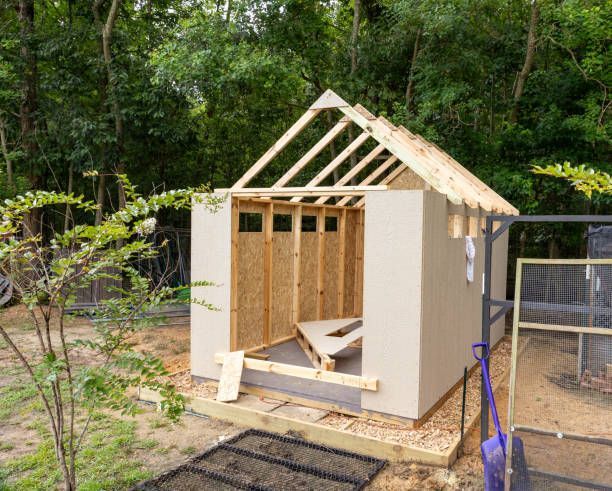
How Does Water Exposure Weaken a Poorly Installed Shed
Water exposure weakens a poorly installed shed by soaking the base, swelling wood-based components, corroding hardware, and creating mold-friendly conditions inside. Once moisture gets under the floor or through roof gaps, the shed can lose strength gradually without obvious damage at first.
Where moisture usually gets in
- Under the shed from poor drainage or direct ground contact
- Through roof seams that were installed out of square
- Around doors that no longer close evenly
- At wall joints where fasteners loosened
- Through condensation when ventilation is poor
Protect the structure and what is stored inside
Water damage is not only a shed problem. It is also a storage problem. If the shed is part of a move, renovation, or seasonal reorganization, using furniture disassembly and reassembly for moving and storage can help protect larger items until the shed is fully dry, sealed, and ready for use.
Many homeowners also pair the project with these garage setup ideas for professional installation so tools, sports gear, and seasonal bins are stored more efficiently across the whole property.
Common Setup Shortcuts That Reduce Shed Lifespan
The setup shortcuts that reduce shed lifespan are usually the ones that save a few hours upfront but create years of stress afterward. Skipping base preparation, rushing assembly, ignoring drainage, and overloading the shed too early all shorten service life and increase repair risk.
Shortcuts that cost the most later
- Setting the shed directly on uneven ground
- Using improvised anchors instead of the right hardware
- Skipping shims or adjustments to “make it fit”
- Storing heavy loads before the structure settles correctly
- Treating ventilation and drainage as optional
Match storage to the right structure
Not every storage need belongs in one backyard shed. Some properties work better with a shed for outdoor equipment plus storage unit assembly and installation for organized bins and overflow items. Business owners may also need commercial storage cabinets indoors when tools, files, or supplies should stay cleaner, drier, and more secure.
Organize before you overload
A shed lasts longer when the contents are planned instead of piled in. Thinking through a full storage space setup strategy helps distribute weight better, improve airflow, and reduce the temptation to force too much into one corner.
Why Professional Installation Helps Prevent Costly Repairs
Professional installation helps prevent costly repairs because experienced installers correct the small issues that later become structural failures. They check grade, squareness, hardware fit, roof alignment, and anchoring during the build, which protects both the shed and the items stored inside.
The value of getting it right the first time
A properly installed shed is less likely to shift, leak, or rack out of square. That means fewer callbacks, fewer seasonal adjustments, and less risk of premature replacement. If you are comparing scope, labor, and site conditions before starting, this outdoor structure installation cost guide gives useful planning context.
Why Any Assembly is a smart choice
Any Assembly serves customers across Maryland, Washington DC, Delaware, Pennsylvania, and Northern Virginia who want outdoor shed installation service done carefully from day one. That matters for homeowners in Baltimore and Bethesda, landlords in Wilmington, property managers in Arlington, and businesses in Alexandria or Harrisburg. If your project includes more than a shed, you can also explore Any Assembly’s broader installation and assembly support.
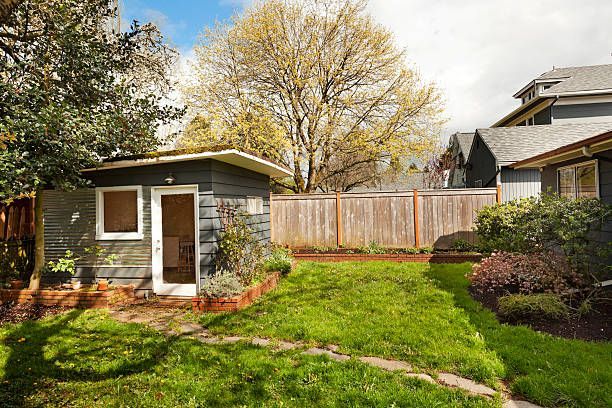
Build Your Storage Shed on a Stronger Foundation
A shed should make your property more useful, not create new maintenance problems. When the base is level, the frame is square, the roof is aligned, and the structure is anchored correctly, you get better moisture protection, smoother door operation, and stronger long term durability.
Choose lasting performance over avoidable repairs
Any Assembly helps homeowners, renters, landlords, property managers, and business owners across Maryland, Washington DC, Delaware, Pennsylvania, and Northern Virginia avoid the mistakes that lead to shifting floors, misaligned walls, and preventable water damage. If you want a shed that is planned for your space and built for long-term performance, contact Any Assembly to schedule professional installation.
Many customers improving their property need more than one project completed. The same practical planning that protects a shed can also support workplace upgrades through office furniture installation strategies for flexible workspaces, smarter yard design choices such as the best basketball hoops for small driveways and limited space, or reclaiming backyard room with trampoline disposal and recycling.
Key Takeaways
- Most storage shed structural issues begin with installation mistakes, not with age alone.
- A weak or uneven foundation can trigger a chain reaction that affects floors, walls, roof seams, and door function.
- Poor anchoring allows subtle movement over time, which speeds up racking, loosening, and water entry.
- Roof and wall alignment errors often start small but create larger durability and moisture problems within a few seasons.
- Common shortcuts such as building on soil, skipping drainage, and rushing assembly lead to avoidable repair costs.
- Professional installation from Any Assembly is often the smarter way to protect shed stability, storage performance, and long-term value.
FREQUENTLY ASKED QUESTIONS
Can a shed sit directly on grass or soil?
No, a shed should not sit directly on grass or bare soil if you want it to last. Ground contact traps moisture, encourages settling, and makes it much harder to keep the floor level over time.
How can I tell if a shed foundation is failing?
A failing foundation often shows up as sticking doors, uneven floors, wall gaps, or water pooling underneath. If one corner appears lower than the others, the base likely needs attention before other repairs will hold.
Does a small shed still need anchoring?
Yes, even smaller sheds should usually be anchored. Light structures can shift from wind, repeated use, or seasonal soil movement, especially when they sit in open or uneven areas.
Why do shed doors stop closing properly after a few years?
Doors usually stop closing properly because the frame has moved out of square. That can happen from settling, poor anchoring, roof stress, or moisture-related swelling around the opening.
How does roof alignment affect long-term durability?
Roof alignment affects how water sheds off the structure and how evenly weight is carried. If the roof sits unevenly, seams can open, fasteners can loosen, and leaks become more likely.
Can water damage under a shed be prevented?
Yes, under-shed water damage is often preventable with a proper foundation, drainage planning, and enough clearance from surrounding soil. Keeping the shed level and elevated helps moisture move away instead of collecting underneath.
When is professional shed installation better than DIY?
Professional installation is usually better when the site is uneven, access is tight, the shed is large, or long-term durability matters more than saving a few hours upfront. It is also the smarter choice when you want correct anchoring, alignment, and weather resistance from the start.
How do I make a shed last longer in changing weather?
Start with a solid foundation, proper anchors, and correct roof and wall alignment. Then manage drainage, avoid overloading the structure, and fix small fit issues before they turn into bigger structural problems.
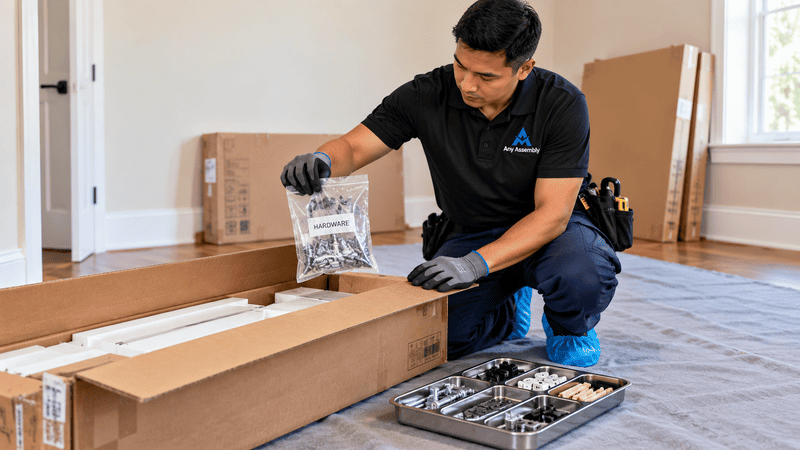

To Ease Your Move Or Redecorate Your Home Space
Follow a Few Easy Steps
Tells us your needs
Please fill up the contact form and provide us with as many details of your project as possible.
Approve Estimate
Our experts will review your project needs and create a plan that works with your schedule. You will then have to review & approve the plan via email.
Project Kick-Off
Once you have approved our solution plan, we'll send professional installers who own just the right tools & equipment in their arsenal to complete your project.
Customer Service 24/7
We’d love to hear from you. Choose the most convenient method and we’ll get back to you as soon as we can.
Contact Us
Contact Us
2707 N Rolling Rd #109, Windsor Mill, Maryland 21244
+1(410) 493-4488
VA
Any Assembly Virginia
+1(703) 596-0086
DC
Any Assembly Washington
+1(202) 684-6782
PA
Any Assembly Pennsylvania
+1(267) 209-0710