

Mounted Basketball Hoop Installation Services
EXPERT FURNITURE AND FITNESS EQUIPMENT INSTALLATION | RESIDENTIAL AND OFFICE MOVING | STORAGE AND DELIVERY SERVICES
Fully Licensed & Insured
Safety is our #1 Priority
All The Services You Need, In One Place
Mounted Basketball Hoop Installation Services
Mounted basketball hoop installation involves securing a backboard and rim system to a wall, garage, or roof using load-rated hardware and structural anchoring. Proper setup protects player safety, supports long-term durability, and ensures the hoop performs reliably during heavy gameplay without shifting, vibrating, or damaging the mounting surface.
- Secure mounting and anchoring into load-bearing structures
- Proper backboard positioning for regulation play
- Improved player safety during aggressive use
- Better hoop stability under repeated impact
- Long-lasting performance with reduced maintenance
Mounted Basketball Hoop Installation Challenges and Professional Setup Solutions
A mounted basketball hoop looks straightforward, yet incorrect installation often leads to serious problems. Loose lag bolts, missing wall studs, or weak fascia boards cause the system to wobble, sag, or pull away over time. As gameplay intensifies, that instability can damage siding, crack drywall, or even injure players.
Professional installation removes these risks by combining structural assessment, precision mounting, and tested hardware. With experienced installers handling the entire process, homeowners gain a hoop that plays well, stays level, and holds up for years.
Professional Installation for Garage, Wall, and Roof Mounted Systems
Professional installation covers every mounting style, including wall-mounted units above garage doors, roof-mounted extension arms, and side-wall configurations. Our team evaluate the surface, locate framing, and select hardware suited to the structure so the finished setup delivers regulation height, level alignment, and dependable everyday performance.
Each property is different. A brick exterior calls for masonry anchors, while wood-framed garages require lag bolts driven into solid studs or blocking.
Many homeowners choose models from popular brands such as the wall-mounted Goalrilla systems because they pair well with reinforced mounting brackets. Whether you have a single-car driveway, a sloped roofline, or a detached garage, experienced installers tailor the approach for safety and playability.
Structural Requirements for Safe Basketball Hoop Mounting
Safe mounting depends on the strength of the host structure. Walls must contain solid framing, masonry, or reinforced backing to handle dynamic loads from dunking, rebounding, and hanging on the rim. Roof installations require rafter access and proper flashing to prevent leaks while distributing force evenly across the structure.
Before drilling begins, our skilled basketball hoop installers verify the following:
- Stud, rafter, or block spacing behind the mounting surface
- Surface condition, including rot, rust, or cracked masonry
- Clearance from gutters, soffits, and electrical lines
- Load rating of the bracket relative to backboard weight
- Compatibility between hardware and siding material
Skipping these checks often results in expensive repairs later, which is why structural inspection is part of every professional visit.
Installation Options for Residential and Recreational Properties
Mounted hoops serve a wide range of properties. Residential garages, driveways, and backyard home courts are the most common, but schools, recreation facilities, and community centers also benefit from durable wall and roof systems that maximize play space without consuming ground area.
For larger venues, our team also handles hoop installations at schools and gyms, where higher usage demands commercial-grade anchoring. Smaller residential jobs can include compact Lifetime basketball hoop models or premium tempered-glass backboards. Each project receives the same attention to alignment, hardware torque, and finished appearance.
| Property Type | Recommended Mount Style | Typical Backboard Size |
|---|---|---|
| Residential garage | Wall-mounted above door | 54 inch acrylic or glass |
| Driveway side wall | Side-wall bracket | 60 inch tempered glass |
| Home court | Roof-mounted extension | 60 to 72 inch glass |
| School gymnasium | Wall-mounted fan or fixed | 72 inch tempered glass |
| Community center | Wall or ceiling-suspended | 72 inch regulation |
Homeowners comparing setups often review trusted resources covering basketball hoop installation services nearby to understand pricing and scope before scheduling.
Proper Placement for Performance, Safety, and Playability
Correct placement determines how the hoop feels during play. The rim must sit ten feet above the playing surface, with adequate clearance around the backboard so players can drive, jump, and rebound without obstruction. Standard basketball hoop dimensions guide each measurement during setup.
Installers also factor in extension distance, which keeps players away from walls during layups, and ensure the backboard sits perfectly plumb. Good placement protects siding, prevents ball deflection issues, and creates a court-like experience even in a residential driveway.
Common Mounting Errors That Lead to Premature Failure
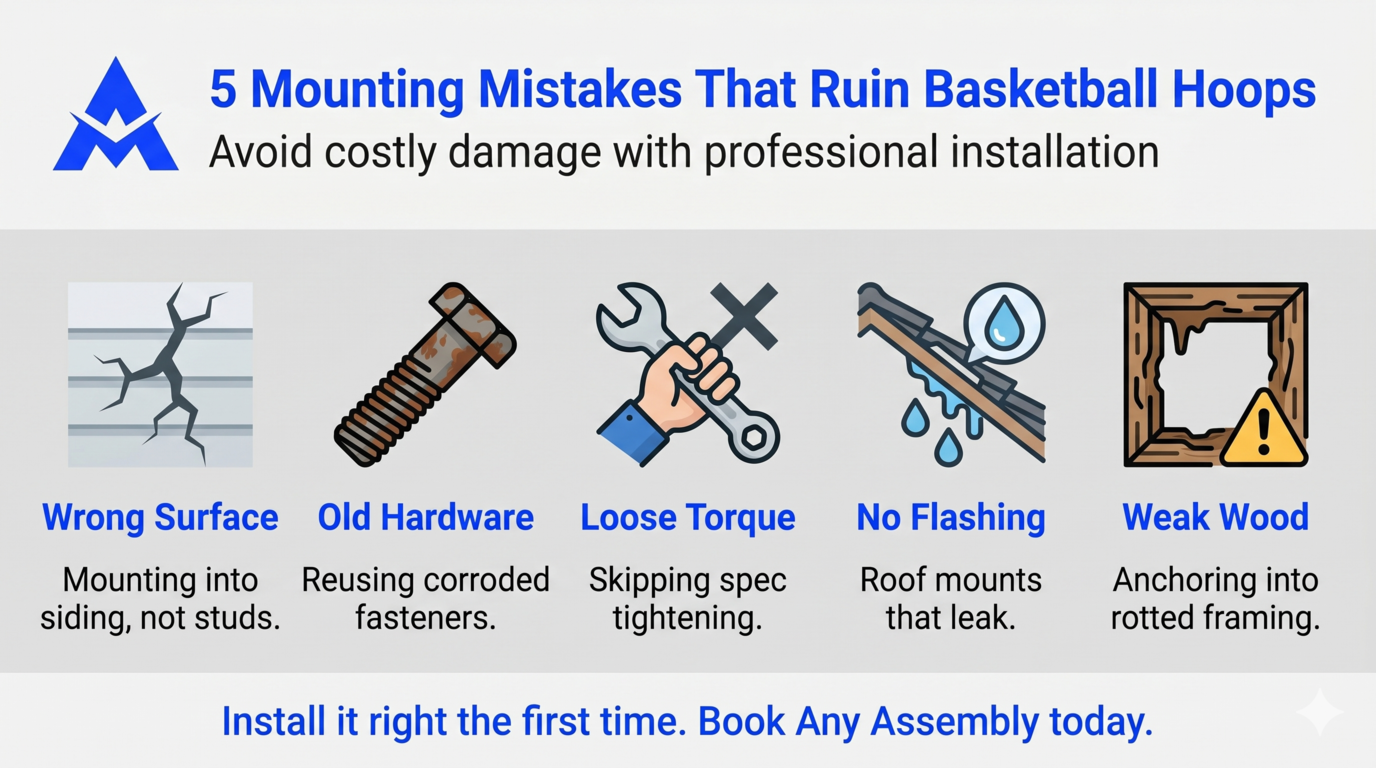
Many failed installations share the same root causes. DIY attempts often miss studs, use undersized fasteners, or anchor into hollow drywall. Over time, vibration loosens the system, and the backboard begins to tilt, shake, or pull away from the surface.
Frequent issues include:
- Mounting into siding rather than framing
- Reusing old or corroded hardware
- Ignoring manufacturer torque specifications
- Skipping waterproof flashing on roof installs
- Installing on damaged or rotted wood
Experienced
wall-mounted hoop installation specialists eliminate these errors by following structural guidelines and testing the assembly before final sign-off.
Relocation, Replacement, and Equipment Upgrade Support
Mounted hoops can be relocated or replaced as families move, remodel, or upgrade equipment. Our team safely removes existing systems, patches mounting points, and reinstalls the hoop at the new location with fresh hardware to preserve structural integrity.
We also assist with upgrades from portable to mounted setups, transitions from acrylic to tempered glass, and full system swaps. If you also need a portable basketball hoop assembled or a permanent in-ground basketball hoop installed, the same crew can handle the project from start to finish. Families relocating outdoor recreation equipment can also explore guidance on playset relocation costs across DC, Maryland, and Virginia before moving day.
For complete outdoor recreation projects, our playground relocation specialists coordinate larger moves involving multiple recreation systems.
Get Professional Mounted Basketball Hoop Installation Services
Any Assembly delivers safe installation, dependable structural integrity, and reliable performance for every mounted basketball hoop project. Our certified installers handle wall, roof, and garage systems with precision hardware, accurate measurements, and full safety testing so your hoop holds up under daily play.
Beyond hoops, we also support related projects such as game table disassembly services, full home setup with professional furniture assembly, and office furniture installation for medical and corporate spaces.
Ready to schedule your installation? Reach out to our installation team to book a convenient appointment and enjoy long-term durability backed by experienced professionals. Trampoline owners can also review above-ground trampoline installation options for additional backyard projects.
WHAT WE DO?
We work with you to come up with the very best solutions for your needs!
Tells us your needs
Please fill up the contact form and provide us with as many details of your project as possible.
Approve Estimate
Our experts will review your project needs and create a plan that works with your schedule. You will then have to review & approve the plan via email.
Project Kick-Off
Once you have approved our solution plan, we'll send professional installers who own just the right tools & equipment in their arsenal to complete your project.
VA
Any Assembly Virginia
+1(703) 596-0086
DC
Any Assembly Washington
+1(202) 684-6782
PA
Any Assembly Pennsylvania
+1(267) 209-0710
FREQUENTLY ASKED QUESTIONS
How long does mounted basketball hoop installation take?
Most residential installations take two to four hours, depending on the mounting surface and backboard size. Roof-mounted systems or commercial setups may require additional time for structural reinforcement and safety testing.
Are roof-mounted basketball hoops safe?
Yes, when installed correctly into solid rafters with proper flashing and bracket support. Professional installers verify load capacity and weatherproofing to prevent leaks, sagging, or structural strain over time.
What wall types can support a mounted basketball hoop?
Wood-framed walls with solid studs, reinforced masonry, and concrete block walls are ideal. Hollow drywall, vinyl siding alone, or rotted wood cannot safely support the dynamic loads created by gameplay.
How much space is needed around a mounted hoop?
A clear playing area of at least fifteen feet in front of the backboard is recommended. Side clearance of five to seven feet helps prevent collisions with walls, vehicles, or landscaping during active play.
Can mounted basketball hoops be relocated?
Yes, mounted hoops can be carefully removed, transported, and reinstalled at a new location. Professional crews patch the original mounting points and use fresh hardware to maintain structural integrity at the new site.
How high should a basketball hoop be installed?
Regulation rim height is ten feet from the playing surface for teens and adults. Adjustable systems allow lower heights, typically between seven and ten feet, which works well for younger players developing their skills.
Is professional installation worth the cost?
Absolutely, since professional installation protects your property, ensures player safety, and extends the lifespan of the equipment. Trained installers also guarantee proper alignment and torque, preventing the common failures associated with DIY mounting.